Showing posts with label recession. Show all posts

01 July 2013

Jobs that don't go away

A human being should be able to change a diaper, plan an invasion, butcher a hog, conn a ship, design a building, write a sonnet, balance accounts, build a wall, set a bone, comfort the dying, take orders, give orders, cooperate, act alone, solve equations, analyze a new problem, pitch manure, program a computer, cook a tasty meal, fight efficiently, die gallantly. Specialization is for insects.  - Robert A. Heinlein, Time Enough for Love.

I do appreciate the sentiment of the quote, but there is a problem with it, for me, in that I grew up in a socialist household and it was preached at me that an hour's work is worth an hour's work, no matter what you do.  That came from the conception of communism and collectivism that put forward a bucolic view that all work was equal and that a man should have equal results from spending a day where he fished for a couple of hours, then tended his garden, mended his clothes, shoed his horse and then went and did an hour of real work and yet would receive recompense for the entire day doing things.  Karl Marx railed against the breaking down of work into smaller processes that could be specialized and each sub-process done quickly by an individual who only had to learn one skill to work for a wage.  This is called a 'division of labor' and Marx hated it as it divorced humans from the world where they should be able to do anything they wanted and have equal recognition for that work.  As much as a number of people adore Heinlein, I hate that quote as it speaks to the division of labor and what it has allowed the world to accomplish.  It has a mistaken belief behind it that any human can turn their hand to any task and be equal in performance, results and pay.

And yet that is just not the case, is it?  You should be able to turn your hand at various things in your life, yes, but your results will vary. 

I'm a generalist, believe me on that.  Being able to turn your hand to any task requires a mindset, an attitude and an aptitude to accept failure and that failure is an indictment of lack of skill, by and large, not a lack of trying.  You don't get paid for trying, you get paid for doing.

In America, today, we have an unemployment problem and it has nothing to do about unemployment and lots to do about how our society has changed its evaluation of work.  Since the start of the Progressive Era, the one that would try to make those who went through school as unlike their parents as possible, there has been an inculcation of the meme that 'to get ahead you need a diploma' or that 'a college degree means you will make more at any job you do'.

These are lies.

I saw that directly as I took up geology in university and the US had just hit the 'oil patch': the place where geologists from the small oil companies, some with multiple degrees under their belts, were flipping burgers just to get by.  A degree, higher education as a pathway to a good job are lies.  At the same time as I was getting a degree in geology, I was putting enough course work in to nearly minor in computer science, my second early love, and that proved to be a rewarding combination.  Note that these are not areas in the 'humanities' or ones that have a racial or ethnic or gender hyphen to them: math is required.

So are labs.

The lab work is that extra credit hour that goes with the main course and without which you don't get a grade.  A putative one hour lab never lasts one hour... and it doesn't matter if they only get the room for one hour or not unless it is the strictest form of lab where you must hand in your observations and results right there at the end of one hour.  I had, exactly, one of those.  Physics, of course, show all work and hand it in as far as you can process it through because methodology means more than results: do the right method and the results should follow.  A lab for seismic prospect, however, could eat up the minimal lab time and then, as you got to keep the results to keep on working at them, you could spend untold hours after the actual lab to get results.  There, in the drilling for oil and gas realm, results matter and your methodology better be correct.  Those labs are ones where you could easily spend ten or twenty hours and be working right up to the hand-in time... and only then find out the professor didn't give out enough information at the start... yet, even for the wasted time, you learned a lot.  Ditto the chemistry labs and labs on things like sedimentation where you could get one wrong sieve in place and lose a week's worth of work that you just don't have time to go back and complete because time and gravity determines how quickly sediment settles.

You can't BS your way to lab results.  Period.  And yet lab work is just a reflection of how gathered material and information are examined, and in geology that means you get field work to do the initial gathering.  Gathering data by something other than remote sensing and actually doing 'ground truthing' can lead to jobs that take you to the middle of absolute nowhere and then involve mucking around in soils, sediment, rock, rivers and streams, and then know that the tent you brought with you is your only real form of life support and comfort.  At the end of every long, winding dirt road is something a geologist wants to look at... or at least that is the way it seemed during field camp.

What you get from the sciences, engineering, technology and machinist world is one in which your political viewpoint doesn't get results.  Results are done through procedure, process, verification and testing.  If you think just because you are of some race, gender, ethnicity or that you are 'special' in any way, shape or form: try doing some work in the fields where education only matters in getting results via proper method, not good feelings.  At the height of the insanity in the old USSR there was the actual belief... taught understanding... that Communist science was different from Capitalist science.  That what you believed would offer you an entirely different set of Natural Laws.  Scientists outside the USSR came up with a term to describe this sort of thinking (I mean that is what those in the sciences do, after all, is discriminate and define... not attempt to define and then force the world to work to the definition) which holds for the entire field of 'good feeling' above hard results via methodology:  Lysenkoism named after Trofim Lysenko.  Lysenkoism believes in predetermined results and then doing everything to prove the results, including adulterating lab results to fit the predetermined schema.  Luckily Lysenko got Stalin to believe in this process and it set Soviet genetics back by decades, which is very lucky as it set their bioweapons programs back by the same amount.

Anthropogenic Global Warming is a form of Lysenkoism.  Anything that shows contrary to the predetermined belief that the globe is warming due to mankind's industrialization, like temperature readings showing that the globe has been cooling for a few decades, is thrown out in favor of the predetermined result.

Now with students graduating with tens of thousands, if not hundreds of thousands of dollars in debt for their higher education, we are seeing that the predetermined belief that a college education gets you a decent job... and therefore a good life... is a lie as well.  It is Lysenkoism in service of Progressivism, and when you can tell them apart, let me know, wouldya?  The result of making sons and daughters as unlike their parents as possible is the destruction of the work ethic and the understanding that there is no such thing as a bad job.  That took me awhile to understand growing up, as I also had that belief, but after temping out doing all sorts of jobs, I learned differently.  And with college graduates with hyphenated degrees, degrees in the 'humanities' that have little to do with human nature and more about political indoctrination, we now find ourselves with a decaying infrastructure and little to no appreciation of what it takes to actually have a civilized, modern world.

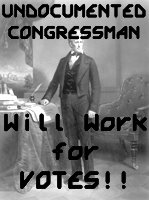
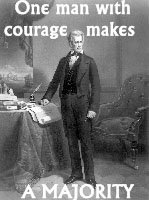
Mike Rowe started out with about a single seasons of Dirty Jobs to do at the Discovery Channel, and figured that would be it.  A nice program to fill up some time  after he had quit being an opera singer because, really, he was an understudy and would probably always be an understudy.  I'm sure there are films about how all you need is one Big Break of the Star Performer having laryngitis, getting a broken leg, etc. for the understudy to come forward and shine... but those are movies for Hollywood, not real life.  In real life, results matter.  Mike Rowe has a great voice for TV and his voice-over narratives on shows like Deadliest Catch, amongst many, gave him a way to feed himself while he looked for other work he could do.  Dirty Jobs let him explore that 'other' work... and then the fans kicked in for seven more seasons of the program's material.  At Profoundly Disconnected there is a graphic that sums up the decades of lies comparing the poster at the guidance counselor's office and what Mr. Rowe has learned about the world:

slide2slide1

Photo courtesy: Profoundly Disconnected

Because of the glowing belief of the 1970's that children should be aspiring to the sheepskin and not to the factory floor, we are now at a point where the jobs of actually cleaning and maintaining our modern infrastructure is putting civilization at risk.  Our way of life depends on jobs that include: welders, pipe fitters, ditch diggers, masons, sanitation workers, and much, much more.

Julie Kantor at the HuffPo, and that is a leftist, progressive rag if they actually printed the thing, but since it is done with electrons and semi-conductors you don't get bird cage liner, was out doing her bit to help create some livable space for monkeys and ran into Mike Rowe:

Rowe with his signature baseball cap and jeans pointed out that in the '70s, colleges created a poster campaign that told us to work smarter not harder, and the campaign was spectacularly successful! Rowe also shared his view that this campaign was the worst advice ever given. Why?

Because...

Out went vocational education and skills-based learning for jobs.

In came college, college, college-bound, NCLB, college loans, and over a trillion in debt.

We shifted focus off of skills and trade and the great equalizer of our country became to get kids college bound and degreed.

We became a country where testing scores are currency and not whether a child can show up on time, a positive mental attitude, focused resume and a work ethic to become an expert in a craft or skill.

We forgot how to just make something that America could sell and many 'dirty jobs' were viewed as beneath us in our quest to work smart but not necessarily hard.

Mike and others have pointed out time and time again to us that most jobs require a two-year degree (yeah, community colleges!) or less, and technical training and certifications. Also pointed out is that many of these jobs, especially if technology or engineering are involved, can start with salaries in the late 40's and 50's. The U.S. Department of Labor shares that only 18 percent of jobs require a 4-year college degree.

"We must be prepared with the skills for America so America will be prepared," said the dynamic youth president on the podium at opening night. The event resembled a Junior Olympics or rock concert with "America Needs Me" posters abound.

I spoke to him afterwards and he would like very much to be a STEM teacher in Automotive Technologies for a few years once he finishes his two-year degree and he plans to continue his education from there.

Rowe suggests that the new motto should be to 'Work Smart and Hard.' That's a campaign we can all get behind. Whether you go to a 4-year college, or a 2-year college, or get some vocational training, know what the jobs you want requires education-wise and what jobs pay to help you map out your decisions and training. Now that's smart!

I hope you will also be touched for the very first time by SkillsUSA and groups like 4H, Girls Scouts, DECA, YearUp, Invent.org, Youthbuild, NFTE and more that teach real deal skills.

And companies... if you haven't already and your struggling to hire...

The estimates vary, but there are between 3 and 5 million dirty jobs in the US going unfilled.  These jobs impact getting construction work done, maintaining roads and bridges, replacing water mains and sewer systems, maintaining and replacing the current electrical grid... none of this is glamorous, none of this is what you would call high tech, but each and every single item in our infrastructure will not last without maintenance and repair work.

We have changed from where being a politician was a job, to one in which it is a career... and yet politicians build nothing, create nothing, and only act as parasites within the organs of the civil body.  They stick around too long with ideas that are outmoded and seek a predetermined end.  Politicians love to classify things into jobs that require government... and they can and do build edifices and those are the warning signs that we must regard, today.

As the saying goes, Rome wasn't built in a day.

It was, however, sacked in three.

What is the amount of time it takes to go from civilized society to being uncivilized?  Three days.

We are missing hundreds of thousands... millions... of jobs by teaching a generation that they are 'special' and that everything they do is 'special' and that Big Brother Government will always take care of them when they fall down.  From our history we can see that Rome also stood on a similar precipice, where the freeman was marginalized by the slaves and freedmen who were connected to the rich, while the citizens of Rome became marginalized.  Yet the Eternal City would not fall completely, even after sacking... that would take a later invader who understood that the aqueducts allowed Rome to be the size it was, and destroyed them.  For its day that was a complex system, and yet in mere years, Rome shrunk from Imperial Capital sized to modest town by a river size.

What killed Rome wasn't the sacking, but the aqueducts being destroyed at key points.  The sacking of Rome was a mere warning sign on the road to barbarism, and yet it was not seen as such.

That is where our civilization now stands: awaiting some key failures for vital infrastructure that we have no one to deploy to repair.  We have seen the acts of barbarism but do not understand that they are symptoms of a disease, at best, not the thing, itself.

Imagine the main water system and supply of any major city not undergoing a terrorist attack, but just failing at so many points due to neglect that the entire system begins a cascade of failures that turns a major metropolitan area into something that only the surface carrying capacity of the water and ditches can support.

The Progressives grew out from Marx's ideas.

If you adore Heinlein you are looking to become a generalist.

I'm letting you know that the good skills necessary to support yourself and others aren't hard to get... Mike Rowe understands this... but you are only special when you are doing a function that is necessary to the support of civilization. 

From Gods of the Copybook Headings by Rudyard Kipling:

In the Carboniferous Epoch we were promised abundance for all,
By robbing selected Peter to pay for collective Paul;
But, though we had plenty of money, there was nothing our money could buy,
And the Gods of the Copybook Headings said:
"If you don't work you die."


Then the Gods of the Market tumbled, and their smooth-tongued wizards withdrew
And the hearts of the meanest were humbled and began to believe it was true
That All is not Gold that Glitters, and Two and Two make Four
And the Gods of the Copybook Headings limped up to explain it once more.


As it will be in the future, it was at the birth of Man
There are only four things certain since Social Progress began.
That the Dog returns to his Vomit and the Sow returns to her Mire,
And the burnt Fool's bandaged finger goes wabbling back to the Fire;


And that after this is accomplished, and the brave new world begins
When all men are paid for existing and no man must pay for his sins,
As surely as Water will wet us, as surely as Fire will burn,
The Gods of the Copybook Headings with terror and slaughter return!

If you don't work, you die.

Plan for a job and a life, first.  Then figure out what you need to get it.

Not the other way around.

And if you have no idea what you should do... pick up some welding skills.  Carpentry.  Brick laying.  Pipefitting.  Electrician.  Plumber.

And if you can't decide, just start doing jobs and picking up skills as they come by.  For while specialization builds a civilized society and infrastructure, the generalist survives its collapse.  That collapse is always just three days away.  You can still do other things when being a specialist on the job... I heartily recommend it!  Do not let your job define you.  You must define yourself and your job is just something you do.

The skills are way cheaper than a four year degree, and won't leave you with a mountain of debt.  And you should be able to find a job in THIS ECONOMY to start your life.  Decent pay.  Debt free.  Good job.  Do you really want more out of live.

Temp out if worse comes to worse, and get a cross-section of skills: refuse nothing from cleaning out old warehouses to setting up pools on windy days to going out in the field to collect soil samples from waste dumps.

Oh, illegals aren't doing these jobs NOW and won't be doing them if they become legalized, just so you know.

'Lose the suits, grab some boots and get a Dirty Job.'

- Mike Rowe and the unofficial theme song of Dirty Jobs.

25 October 2009

Emergency Government

“The whole aim of practical politics is to keep the populace alarmed (and hence clamorous to be led to safety) by menacing it with an endless series of hobgoblins, all of them imaginary.” -H. L. Mencken (from Ralph Benko, from an addendum to a Mark Tapscott story at the Washington Examiner, found via Instapundit)

Yes we have yet another emergency, this the Swine Flu which was predicted months ago and the President promised that there would be enough vaccine for everyone, and from the folks who brought you:

"You never want a serious crisis to go to waste. And what I mean by that is an opportunity to do things you think you could not do before." - Rahm Emanuel

That was when the entire economy was going to go poof overnight and we needed, desperately needed, the stimulus package to do something!  Or perhaps it was the big, bad banks who were following federal regulations on lending and putting money out to borrowers who couldn't pay it back in housing and other areas that needed, oh, so needed, the TARP and rescue package because they were too big to fail! The auto companies were going down and they would be forced to go bankrupt and re-organize which would be awful because that would mean massive job loss and we just had to do something! And we have to have more lending in the housing market because that will collapse and the entire Nation will go to wrack and ruin , so we have to do something!  And the stimulus has pushed unemployment far above the expectations of doing nothing that we now need, desperately need, a second stimulus package, because we just can't sit by and do nothing!

Meanwhile, those Nations that didn't go on a spending binge are out of their recessions, worried that the US will pull down the rest of the world market as we flush our economy down the drain with emergency spending, and wondering just why the hell we can't stop doing things and let the recovery take over.  But those are the so very wise European governments that we are supposed to take our wisdom from... say, just why can't we follow their leads and let the economy recover and not try to tax and spend ourselves to oblivion and take much of the rest of the world economy with us?  For all the grousing, moaning and complaining about how much of the world's resources the US uses, it is also a fact that we are a quarter of the world's economy, produce much more per capita than anyone else around, and the world depends on us to be sober in our spending habits.

Instead we have gotten a massive hit to our economy, massive job loss, a disorganized private sector because government now sees fit to invalidate contracts on whim, and tax money flowing out in a tidal wave that will cause massive structural debt, increased inflation, devalue the dollar, and bring instability to all those countries holding securities in the US who are seeing their investment in our way of life go poof!

Now here's the question on structural debt via Non-Performing Loans (NPLs).

I've heard the US is heading north on NPLs, which are loans 90 days past due and unlikely to ever be paid off.  A large part of that is due to the new home market, which ripples through the economy to durable goods and consumer sectors.  We brought that on ourselves by encouraging those who are economically marginal to actually get federally pushed loans via lenders and the FHA then packaged those up (along with Freddie and Fannie) and put the 'US Govt Safe' seal of approval on them, when the loans, themselves, were anything but safe.  Now I'm going to start stealing some data from one of my previous articles to look at the NPL problems that have happened elsewhere:

NPL are Loans that are in default or close to being in default. And this International Journalists' Network article by Anya Schiffrin on the large role of NPLs in banking crises, points out that once a Nation gets over 9% NPL on all outstanding loans, it is starting to look at real trouble.

The role of NPLs in a Nation's economic structure cannot be over stated.  At the time of writing that article, the US NPL was less than 2% with the majority of that being in consumer debt, not institutional or business debt, and the majority of that consumer debt in the NPL status was in credit cards.

Now a note of update on my article via a Business Insider 23 OCT 2009 article by Joe Weisenthal who references this Financial Times article by Arthur Kroeber on 06 OCT 2009:

So just how big is China’s NPL time-bomb? That is largely a function of economic growth rates.

Average annual nominal GDP growth of 11 per cent, 9 per cent and 7 per cent over the next decade would generate net fiscal NPL costs of 6 per cent, 7.2 per cent and 8.7 per cent of GDP respectively in 2019 – substantial, but not catastrophic.

There is no necessary reason why existing NPLs, even including bad loans arising from the 2009-2010 monetary stimulus, should threaten the viability of the system. In short, the calculated bet of letting NPLs shrivel through time and growth can safely be placed one more time.

But this bet absolutely cannot be placed a third time.

The above scenarios only work if the financial system generates no net new NPLs in 2011-2019 beyond the banks’ own ability to provision and write down.

China has been playing games with its debt by shuffling it around to different vehicles, and has done so since the 1990's.  Twice China has shuffled its debt to different vehicles, and now the money is expecting to be paid out.  China has a major problem: there is a global recession and many of its hardest cash holdings are in the US real estate market, via investing in Freddie and Fannie.  The crony capitalist system, a form of national socialism, has allowed those in favor with the regime to build businesses, default on those loans when the businesses collapse and have that passed into debt vehicles approved of by the government.  Any similarity to the passing on of bad housing debt via federally approved vehicles is purely intentional.

Plus for all the phenomenal growth rate China reports, the conservative estimate of having 30% of their economy underwritten by these loan vehicles, in other words 60% of their GDP depending on NPL loan swaps to different vehicles, is conservative because China under-reports the NPLs and over-estimates its growth.  Market based estimates go up to 50% of the economy underwritten by NPL loan vehicles picking up the temporary tab for the bills of past failures.  Those bills are coming due, US housing investments are tanking and China is in a bind.

So how are things going here?  Well the FDIC Select Peer Group and Report Date for 30 JUN 2009 sees some disturbing trends on 06 and 06A:

Real Estate Loans in the non-accrual and 90+ days past due is up to 2.31% from 1.29% in 2008.

Commercial real estate is up to 0.11% in the same category, up from 0.01% in 2008.

Construction and land development up to 5.23% from 2.16% in 2008.

1-4 family homes 4.10% up from 1.89% in 2008.

Other construction and land development 5.45% up from 1.95% in 2008.

The longer trends on these are going from EOY to mid-Year cycle so that there is only 6 months between 2007 and 2008, but still interesting to note them (06/30/2009, 06/30/2008, 12/31/2007, 12/31/2006), again all for the NPL (non-accrual plus 90+ days past due):

Real Estate  2.31%  1.29%  1.76%  0.90%  0.57%

Commercial 0.11%  0.01%  0.03%  0.00%  N/A

Const.         5.23%  2.16%  3.57%  1.05%  0.24%

1-4 Family    4.10%  1.89%  3.05%  1.34%  N/A

Other           5.45%  1.95%  3.44%  1.18%  N/A

We are just now getting the repercussions of the tanking of the real estate market in the NPL arena for housing.  Construction can be seen as a leading indicator as it feels the pinch first when housing starts are put on hold or canceled, thus causing a rippling into that part of the industry.  The last two interesting, indicating a cyclic market, but one that is increasing in its NPL area.  All of this while the mortgage market is only slowly seeing its rates go up for the same category:

Non-Farm Mort/Residential  1.66%  0.81%  1.20%  0.61%

The category I'm not showing is the 30-89 days past due, which shows that some of the influence is from those loans, no doubt, slipping into the other categories or just having a delinquent set of payees who can get payments in but late on a continual basis.  On 06A we get the final Gross line item for all loans and leases for the 06 section, and below that, in the totals, we get the full percent of all loans and leases past due including non-accrual for the entire banking industry that is overseen by the FDIC:

%Total P/D LN/LS    3.78%  2.45%  3.30%  2.20%  1.17%

This is a pretty good proxy stand-in for National NPL status, and the trendline from EOY 2006 to MID 2009 is up in all categories thus reflected in the total which is up by over double.  Of particular note is that the 'housing crisis' starting by EOY 2007 had lessened, somewhat, by MID-2008, and this was reflected in all P/D loans in all categories.  Thus the MID 2008 to MID 2009 jump is due to the intervening months as the market had been digesting the problems by EOY 2007.  The multiple 'crises' times between those two reporting periods changed what had been an up and down, choppy trendline (in other words still increasing but with rapid market changes) to one that now flattens out to increasing at a much higher rate.  If all the 'necessary' things to 'stabilize' the market had, indeed, actually stabilized the market, each of these trends would have flattened with minimal increase from the previous year.  Even with the undigested loans in the market, those were being addressed by changing in lending practices and crunching those loans out of the system.  This did cause some massive losses in big banks and all the money poured into those should have stabilized the market, but didn't do that.

So we are left at MID 2009 with NPLs going up towards 4%.

This is before all the 'stimulus' money gets into the pipeline, which is causing headaches on loans and lending as the projects that are being done do not address the structural problems of the market.

Additionally the Community Re-investment Act is getting re-upped, which is a major cause of the increasing home prices over time, due to easy money lending practices to those who can't afford such loans.  That is causing structural debt problems in the market that need more than just cash infusion in them, and need a change in the regulations to allow normal repayment expectations to hold sway and get the federal 'help' in lending out of the system.  Additionally the banks should be the ones to judge the ability of those credit vehicles that gather up such losses and put them on the market.  As both Democrats and Republicans have voted to approve past revisions of the CRA to achieve these policies, there is no 'party' to whine about as being at fault: they are both idiots in this area.

Finally some of the instability is reflected in TARP, itself, with funds going unaccounted for and the market not knowing how the public will react to that.  As the Federal Reserve pushed that vehicle forward, and Timothy Geithner was a prime mover at the end of the Bush Administration and continues on in the Obama Administration, his role in this is not to be underestimated, particularly in the lead-up to the 'necessary' bailouts.

So, if you really and truly believe that all the spending will actually make the government solvent AND help out the entire market for NPLs, then you need to address the structural components leading up to this problem, which has been in large part from the federal side, with crony lending institutions (FHA, Freddie and Fannie) plus willing (or coerced) banks facilitating these policies which date back to the Carter Administration and were puffed up during the Clinton Administration and Bush Administration.  That is a bi-partisan problem and pissing about it being 'Bush's Fault' ignores the long standing structural problems both parties have willingly introduced into the lending arena.  All of those extra regulations to 'help' people have now changed the path of the entire economy, and throwing good money after bad is putting us into a nasty position of not being able to have all that lovely outgo be covered by tax income.  That then gets you inflation, as the Federal Reserve puts money into the system to cover those debts, thus reducing the value of the dollars currently held.  And supporters must then address the economic growth problem in the US, as small businesses are not hiring people due to the instability in the market introduced by the federal government and more regulations and not letting the rule of law put companies into bankruptcy for restructuring, and those external holders of our debt that have a huge insolvent debt load that needs some hard cash income to try and keep their economy afloat.

Which is China.

If you cry, bitch and moan about Halliburton and its evility, then where is the crying, bitching and moaning about AIG, Merrill Lynch, Bank of America, GM, Chrysler, etc. that are holding this country hostage with federal help?  If you complain about the petty overcharges by Halliburton, then why are you not complaining about the huge rip-off that is going on with these companies and the billions in TARP that are not being accounted for?  Would it not be better to have these large companies go through bankruptcy restructuring, which they would all do, have their debt and valuation properly assessed and then get on with life as smaller, leaner companies that would then open up the market to new entrants?  Or do you really like the idea that companies deemed 'too big to fail' can hold our Nation hostage via willing politicians willing to put these huge corporations on the dole and then run them as efficiently as the federal government can, which is at the post office level of things?

I am more than willing to let the rule of law run its course with these companies.

'Cash for Clunkers' was a nice one month sugar rush, but now the auto market is seeing less in the way of purchases as people decided to buy early and not try to get the best possible deal on a car later.  Thus you are not getting a long term upturn in the market, but a short to mid length down turn that is happening during a recession.  Thus making the recession worse.  It is that same sort of 'do something for the sake of doing something without a plan' that is causing this problem.  Extending loans to those who can't pay them back means more failed loans, not increased prosperity.  Increased prosperity means more and better paying jobs and a competitive job market, not one with artificial price supports in it at the low end which places a barrier to entry for first time job holders in place because of the cost of hiring them.  This is not getting people to work, allowing them to make a living for themselves, no matter how marginal, and making the entire cost of business much, much higher and encouraging businesses to lay off people at the low end.  Which we now have during a recession with the latest minimum wage jump.

This economy is being run into the ground by politicians who think that we can regulate our way to nirvana, and willing followers who believe that everything in life should be regulated.

That is not a description of freedom, but one of tyranny.

23 December 2007

Your MSM Christmas gift: A Recession

Time for some fun with the 'recession is imminent' meme at Christmas! No matter how good things are a recession is just around the corner...

That 2006 Christmas gift recession was just going to be awful in 2007, this from BusinessWeek 30 NOV 2006:

The Economy: Not Looking Like Christmas
The GDP, even revised up, is still down. Inventories have grown. And data like truck-freight stats are nothing you'd want under the tree
by Peter Coy

Don't jingle any bells for the U.S. economy as the holiday season heats up. From major headline numbers like the gross domestic product (GDP) report to out-of-the-way stats like truck tonnage, the economy seems to be stuck in below-trend growth. Let's hope Federal Reserve Chairman Ben S. Bernanke is right that things will get better in 2007. (see BusinessWeek.com, 11/28/06, "Questions for the Fed Chairman" and 11/29/06, "The Economic Outlook").

Start with the biggest number of the week: the Commerce Dept.'s Nov. 29 revision of third-quarter GDP. It looked positive at first glance: a 2.2%, instead of a 1.6%, annual rate of growth in GDP in the third quarter. Stocks even rallied, with strong gains from AT&T (T) and Dell (DELL) to ExxonMobil (XOM) and ConocoPhillips (COP) (see BusinessWeek.com, 11/29/06, "Stocks Rise on GDP Data").


Look At The Fine Print
But take a closer look. The 2.2% growth rate is still a deceleration from the first quarter (5.6%) and second quarter (2.6%), and is below the economy's sustainable path for long-term growth, which is a little below 3% per year.

[..]

Looking ahead to 2007, it takes a sunny disposition to share the Fed chairman's view, expressed in a Nov. 28 speech, that the economy will get back on or close to its regular growth path. The buildup of inventories will tend to dampen growth because companies don't need to produce as much if there's a backlog of unsold products. Housing will continue to be a drag as well. Residential construction fell at an 18% rate in the third quarter, even worse than originally estimated. That alone took almost 1.2 percentage points off the rate of GDP growth. And the inventory of unsold homes remains exceptionally high.

Now we can't have a sunny disposition around Christmas, can we?

Nor just after it, apparently, this from CNN, 26 DEC 2006:
Recession clouds darken 2007 outlook
Most economists expect slower growth and no downturn, but some recent signals are flashing red.
By Chris Isidore, CNNMoney.com
December 26 2006: 3:26 PM EST

NEW YORK (CNNMoney.com) -- The economy is stumbling at the end of 2006, setting off alarm bells that growth might not just slow next year but that the nation could tumble into a recession.

The recent trend of slower growth is not expected to be reversed any time soon. Home building and the broader real estate market are both already in a recession by most accounts and are expected to stay there well into next year. Manufacturing could soon follow, according to some recent readings.

While most economists are still expecting the economy to avoid a full-blown downturn next year, several say the odds of a recession have risen. Even the more optimistic analysts are looking for a slowdown in growth in gross domestic product (GDP), the broadest measure of the economy, to between 2 and 3 percent next year, from 3 percent or better this year.
Yes the odds of recession have risen!! Mind you this is with all of that current worries about folks taking out mortgages they could never afford in full play... the housing market was 'stumbling'!!

Happy New Year!

Just how was that 2007 recession, anyway?

Of course that 2005 look at the coming problems in 2006 was nothing to write home about, either, as seen by a WSJ article at SouthCoastToday.com 11 NOV 2005:
Economists see consumer spending dropping
By DAVID WESSEL, The Wall Street Journal

Will the triple whammy of higher energy prices, higher interest rates and a slowing U.S. housing market bring the long-forecast end to American consumers' buying binge just in time for the Christmas shopping season?


You would think so to glance at economists' forecasts for the fourth quarter. Consumer spending, adjusted for inflation, could fall for the first time since the early 1990s recession, they say. At best, they expect a tiny increase of less than 1 percent, far below the 3.5 percent-plus increases of recent quarters, measured at an annual rate.


Much of that reflects developments that depress spending temporarily, such as the ill-effects of the hurricanes. But the big factor is auto sales. They plunged in October as auto makers tried--unsuccessfully--to wean their customers off various incentives.


Still ahead is the economically important holiday season. Department, discount, clothing and electronics stores do about 25 percent of their sales in November and December; jewelry stores do one-third. With gasoline and heating prices siphoning money from consumers' wallets, the betting is that this year's sales increase won't match last year's strong one. Scott Hoyt of forecaster Economy.com sums up his Christmas forecast this way: "Not as good as the last two, but not as bad as the two before that."

[..]

With raises scarce, consumer spending has been sustained by Americans refinancing their mortgages and spending some of the proceeds. Americans pulled about $600 billion out of their homes in 2004. Lehman Brothers economist Joseph Abate figures that'll drop to about $540 billion this year and $380 billion in 2006.


This slowdown in consumer spending will hurt--not only consumers who may spend more on gasoline and heat and enjoy less of other things, but also auto makers, computer makers, cable-TV companies, ball clubs, retailers and other businesses that depend on consumers.

But the overall U.S. economy can continue to grow at a reasonably healthy pace--if business investment and exports perk up. The optimists say that's likely. Mickey Levy, chief economist at Bank of America, for instance, expects the moderating of consumer spending to be offset by a big boost in government purchases triggered by the hurricanes, healthy growth in investment by businesses enjoying fat profits and an improving export picture as Japan (finally) recovers.

At the Fed and some other quarters all this would be a very welcome outcome. "I…expect some slowing in the rates of increase of consumer spending…in response to higher interest rates and a less ebullient housing market," Fed governor Donald Kohn said in a recent speech. "In my view, these developments--housing markets coming off the boil and an accompanying gradual rise in household saving out of current income--would be favorable for fostering sustainable economic growth and better balance between spending and production here in the U.S."


Yes this 'housing crisis' we have today was due to the 'less than ebullient' housing market coming 'off the boil' in 2005 and prior to that, right? But that was due to the lovely recession of 2005 now, wasn't it? That is how WorldOil.com saw things in a FEB 2005 article, wantint to prepare folks for the really bad shock of 2005:
Congress likely to differ with Bush on US energy policy

John McCaughey, Contributing Editor, Washington

A second term, the political scientists instruct us, is often referred to as "the legacy term," in which a US President seeks one (or, with good luck, several) achievements that will define his role in history. This is all very commendable, to be sure, but the question is whether the buoyant (although not, of course, triumphal) President George W. Bush can deliver.

In energy, the signs are not encouraging. Washington energy lobbyists and other observers fear that the President will have as little success with his energy bill and other goals (such as opening up the Arctic National Wildlife Refuge to drilling) as he did in his first term. That is to say, no success. They fear that he will be preoccupied with spending his political capital on big-ticket items like Social Security, tax simplification and tort law reform.

[..]

Contrary to the bombast of the over-heated election campaign, the US economy is not in bad shape. Inflation-adjusted gross domestic product (GDP) growth is up about 4%, annually, over the last two years, or a half-percentage point better than the long-term average. But there is no shortage of threats - notably the price of oil and the falling dollar.

Oil prices are the biggest worry, not so much because of OPEC greed, but because of the long-running debate on when, exactly, global oil production will irreversibly peak. A pessimistic school argues that this could be as soon as within the next 10 years, with catastrophic consequences if mitigation measures are not put in train immediately (coal, nuclear and oil shale alternatives are most often mentioned; wind power and renewables just won't cut it).

OPEC (notably Saudi Arabia) beats a contrary, optimistic drum on reserves and production potential, but nobody with intelligence has believed OPEC production or reserves numbers for decades past. A forthcoming DOE study on global oil production peaking may throw light on the contentious topic, if the agency ever screws up the nerve to release it. Peaking aside, if oil prices stay at their present level (nudging $50/bbl), many economists predict a recession in 2005.
Yes, it was 'the economy, stupid' which wasn't doing so bad in 2004. But those $50/barrel prices on oil were sure to make a nasty recession, right?

Your Christmas joy for 2005, dampened:

Enjoy Your Last Christmas Before The Bear Market - by Paul Ferrell - Fox News, 14 DEC 2005

ARROYO GRANDE, Calif. — Yes, you heard me right: This is the very last Christmas before next recession and bear market. So make the most of it. Seriously, have fun, buy lots of presents (on credit), celebrate with the folks, eat hearty, enjoy the eggnog, kiss a cutie under the mistletoe, root for your favorite team on New Year's Day.

Have fun, because the party's almost over. The bets are that 2006 is going to be bad news for the market, the economy and your pocketbook. So live it up, folks! You may as well have one last big fling before reality sets in and the bottom falls out. Here's what some of America's meanest old Scrooges are saying to try to dampen your holiday spirit:

Jeremy Grantham of GMO ($135 billion assets) [..]
Gary Shilling, economist [..]
Bill Gross of Pimco ($475 billion assets) [..]
Fed Chairman Alan Greenspan [..]
Yes 2006 was such a gloomy year!

We knew this was so because George Soros said so, NewsMax 09 JAN 2006:

Soros Fears U.S. Recession, Housing Market Bust
MoneyNews
Monday, Jan. 9, 2006

[..]

"I expect the recession to occur in 2007," he said, indicating that the Fed will spend some or all of 2006 raising interest rates to fend off inflation.

Soros predicted the Fed will increase the federal funds rate, now at 4.25 percent, to peak at 4.75 percent.

"Almost inevitably, they have got to overshoot because they can't stop (raising interest rates) until the economy shows signs of a slowdown," Soros said. "By the time it shows those signs it may be a little too late. I happen to be on the pessimistic side."

And Soros is hardly alone in his assessment that the U.S. housing market is in peril.

Bloomberg reports that the number of mortgage applications filed during the last week of 2005 were at a three-year low (of course, not many Americans purchase homes during the week between Christmas and New Year's Day). And David Heike, chief credit analyst at Lehman Brothers Holdings, tells Bloomberg that a housing slump will shave the U.S. growth rate by up to 1%.

In minutes from its Dec.13 Federal Open Market Committee Meeting the Fed indicated that American economic growth would slow down in 2006, but not significantly.


So there you have Alan Greenspan AND George Soros predicting doom 'n gloom to dampen the fading holiday cheer. Always toss the gloomy stuff up front and put the countervailing positive news at the end of the article, so it is already pre-gloomified. So much for 2006, just a full-on recession, I guess.

That recession of 2oo5 was going to be so awful! The Merk Fund said so on 12 AUG 2004:
New chapter in inflation/deflation battle: US economy is setting up for recession
Axel Merk, August 12th 2004
This article was written by Merk Investments before the Merk Hard Currency Fund was launched.

Employment growth in the US has stalled, corporate inventories are rising at alarming rates. CEOs say it's only a "soft patch" in the economy; Greenspan says its due to "transitory influences" of higher oil prices.

We disagree. Only a few weeks ago, Greenspan forecast that employment growth will accelerate, it's not a question of whether, but when. He was wrong. The massive stimulus provided by the Bush administration and Greenspan over the past couple of years has run out, and the economy has run out of steam. The next stimulus package will not be passed before the next administration is in office. Until then, the only stimulus we will get is the extraordinary multi-billion dollar cash dividend by Microsoft, some of which will find its way into consumer pockets around Christmas time, a boost to GDP by some estimates of 0.2%-0.3%.

Greenspan has acted to raise interest rates further this week. He had little choice as he has waited too long to raise rates and must get rates to a higher level, so that he can lower them down the road to provide a stimulus. Even at current levels, interest rates build inflationary pressures. Greenspan must also put a brave face on the economy, as the perception of his actions is becoming ever more important.

The inflation/deflation battle is unfolding, and it has taken a turn different from what we had seen as the most likely scenario. Over the past year, long-term interest rates have only reacted to economic growth, not to the inflationary buildup. This spring, long-term bonds collapsed, and we anticipated that inflationary forces would start to be reflected in long-term interest rates. Last week, it became apparent that both the rise, and - as of a few weeks -, the fall in long-term rates, are solely attributed to economic growth, or lack thereof. When it was confirmed last week that the economy is slowing down, long-term rates fell, the stock market fell, the dollar fell, gold rose.

[..]

A year ago, we believed that the most optimistic scenario to unfold would be a high-growth, high-inflation scenario. This is not happening, not with no additional stimulus for at least another 6-9 months and rising short-term interest rates.

The US housing market is topping out. In Southern California, one of the hottest housing markets, a rush of inventory has come on the market, but fewer buyers are around -- so far, prices are holding up. A collapse of the housing bubble would be a death blow to the US consumer, a consumer that was stimulated to continue spending throughout the past 10 years.

Every economic cycle unfolds differently. Just when central bankers thought they had seen it all, they are faced with new challenges. This will unfold differently from the stagflation of the 1970s, but we don't envy the winner of the upcoming election.
Not that a "Hard Currency Fund" just might spin things a little before they actually announce it... and how about that 'housing bubble' collapes being a 'death blow' to consumers? That has got to be one of the neatest wrestling holds ever seen - the bubble collapse death blow!

In case anyone missed it the US economy was coming out of a recession in 2004 the so-called 'jobless recovery' in which plenty of folks were still finding jobs. By 2005 that would be the haunting spectre to gloom up the recovery. This from Fox News, 15 JAN 2005:
Slow Job Growth Casts Shadow Over Sunny Economic Forecasts
Sunday, January 16, 2005

By Susan C. Walker


Midway through January, and the economic forecasts for 2005 are in.

The Conference Board predicts annual real gross domestic product (GDP) of 4.7 percent. That number represents the high end of the range, as a group of economists surveyed by The Wall Street Journal pegs it at 3.6 percent, while the White House declares it will be closer to 3.5 percent.

And here's some good news for those who are worried about inflation: the Federal Reserve says that "inflation and longer-term inflation expectations remain well contained."

So, decent GDP growth with few worries about inflation — the kind of reassuring outlook that says all will be well in 2005. Except for one thing: slow job growth.

A pessimistic report for job growth in 2005 got buried under the more optimistic economic forecasts. It's been lurking around since Dec. 17, when the White House announced it was scaling back its expectations for U.S. job growth. Instead of the 3.6 million new jobs it had projected for 2005 in early 2004, it now projects 2.1 million new jobs.

Let's take a look back to the beginning of 2004 to find out what the outlook for job growth was then. On Jan. 2, 2004, The Wall Street Journal reported that 54 economists it surveyed believed that "rising corporate profits and steady economic growth are expected to prompt companies to hire workers more aggressively in the months ahead."

But in July, the Christian Science Monitor (search) published a story on the economy that stated: "So far this summer, the job market is the economy's weakest link." Following a good report in October of 312,000 new jobs (revised), the latest report from the Bureau of Labor Statistics (search) was little more than half that number, coming in at 157,000 new jobs created in December. Wall Street had been expecting 175,000 new jobs for the month.

Here’s the point: This economic recovery is creating new jobs (and 2004 was the best year since 1999), but it's not creating enough new jobs to support a full recovery from a recession. And no one — not private-sector economists, not academic economists, not Council of Economic Advisors economists — had forecast such a scenario.
And, I take it, the economy tanked in 2005? The unemployed wandering the Great Plains like vast herds of Bison?

Then there was the post-9/11 Recession that was predicted to last well into 2002 (via FindArticles):

Yes, Virginia, there really is a recession - View Point - discount stores, drug store chains report good sales figure for Christmas season 2001 - Brief Article - Statistical Data Included

Drug Store News, Dec 17, 2001 by Rob Eder

[..]

While the economy may have bottomed out already, it is highly unlikely that any turnaround will be completed over the next 12 months. Consumers are going to get used to living with less and continue to respond to the strong value proposition in 2002. Drug chains may want to keep that in mind when they start thinking about next year's holiday promotions. They just might find themselves a destination for holiday gift shopping--and not just the last-minute variety.


I assume the drugstores shriveled up and died in 2002, along with everyone else...

And the recession that hit? Why it had been predicted for YEARS ahead of time, as witness by Greg Kaza in that 'recovery' year of 2004 at National Review Online, 04 MAY 2004:
“Clear Signs of Deterioration”
The Fed was worried about the economy in 1998.


By Greg Kaza

Tax-cut opponents may call the economic slide of 2001 “the Bush recession,” but the Federal Reserve was worried about recessionary indicators as far back as 1998, more than two years before President George W. Bush took office.

According to 1,065 pages of Federal Open Market Committee transcripts released in late April (after a five-year embargo), Fed chairman Alan Greenspan worried privately about deteriorating economic conditions well prior to Bush’s election or candidacy, with FOMC members repeatedly expressing concerns about the manufacturing sector.

“The economy has been holding up,” Greenspan said in a Sept. 21, 1998, teleconference, “but it is now showing clear signs of deterioration, including anecdotal indications of some softening that we are now picking up at an increasing pace.” This September meeting was called to discuss the first of three consecutive monthly reductions in the federal funds interest rate. The last time the Fed took such action was in late 1991, the year the last recession ended.

The transcripts supplement economic data that show serious problems in the private manufacturing sector well in advance of the recession, which lasted from March to November 2001.

Manufacturing employment, an important indicator, peaked in March 1998. Fed bank presidents representing districts in industrial states (Michigan, Ohio, Wisconsin, and Pennsylvania) are quoted in the 1998 transcripts discussing manufacturing problems in those regions.

At the Aug. 18, 1998, FOMC meeting, Chicago’s Michael Moskow referred to “weakness” in durable-goods manufacturing employment. Anecdotal evidence of such weakness was discussed at two FOMC meetings the following month.

“While the economy is operating at a relatively high level,” said Philadelphia’s Ed Boehne on Sept. 21, “I have sensed a notable change of sentiment in recent weeks. It had been largely in the manufacturing area, but it now appears to have spilled out into broader sectors of the economy.”
Anyone ever hear of the 'internet stock bubble'?

No?

So maybe it was just more than 9/11... or course that would leave President Clinton's policies a bit at fault. And far too much venture capitalism in the tech market and, well, a recession is just around the corner anyways.

Especially at Christmas! Economic gloom is the perfect gift for holiday cheer.

Merry Christmas!

And remember that lump of coal in your stocking is 'recession proof' as you can't go much further down than that with Santa...