26 July 2010

Journolist and antitrust

From The Daily Caller, 21 JUL 2010 article by Jonathan Strong quoting Journolist members:

“I am genuinely scared” of Fox, wrote Guardian columnist Daniel Davies, because it “shows you that a genuinely shameless and unethical media organisation *cannot* be controlled by any form of peer pressure or self-regulation, and nor can it be successfully cold-shouldered or ostracised. In order to have even a semblance of control, you need a tough legal framework.” Davies, a Brit, frequently argued the United States needed stricter libel laws.

“I agree,” said Michael Scherer of Time Magazine. Roger “Ailes understands that his job is to build a tribal identity, not a news organization. You can’t hurt Fox by saying it gets it wrong, if Ailes just uses the criticism to deepen the tribal identity.”

Jonathan Zasloff, a law professor at UCLA, suggested that the federal government simply yank Fox off the air. “I hate to open this can of worms,” he wrote, “but is there any reason why the FCC couldn’t simply pull their broadcasting permit once it expires?”

And so a debate ensued. Time’s Scherer, who had seemed to express support for increased regulation of Fox, suddenly appeared to have qualms: “Do you really want the political parties/white house picking which media operations are news operations and which are a less respectable hybrid of news and political advocacy?”

But Zasloff stuck to his position. “I think that they are doing that anyway; they leak to whom they want to for political purposes,” he wrote. “If this means that some White House reporters don’t get a press pass for the press secretary’s daily briefing and that this means that they actually have to, you know, do some reporting and analysis instead of repeating press releases, then I’ll take that risk.”

Scherer seemed alarmed. “So we would have press briefings in which only media organizations that are deemed by the briefer to be acceptable are invited to attend?”

John Judis, a senior editor at the New Republic, came down on Zasloff’s side, the side of censorship. “Pre-Fox,” he wrote, “I’d say Scherer’s questions made sense as a question of principle. Now it is only tactical.”

From 15 USC 1:

Sec. 1. Trusts, etc., in restraint of trade illegal; penalty

Every contract, combination in the form of trust or otherwise, or conspiracy, in restraint of trade or commerce among the several States, or with foreign nations, is declared to be illegal. Every person who shall make any contract or engage in any combination or conspiracy hereby declared to be illegal shall be deemed guilty of a felony, and, on conviction thereof, shall be punished by fine not exceeding $10,000,000 if a corporation, or, if any other person, $350,000, or by imprisonment not exceeding three years, or by both said punishments, in the discretion of the court.

From 15 USC 2:

Sec. 2. Monopolizing trade a felony; penalty

Every person who shall monopolize, or attempt to monopolize, or combine or conspire with any other person or persons, to monopolize any part of the trade or commerce among the several States, or with foreign nations, shall be deemed guilty of a felony, and, on conviction thereof, shall be punished by fine not exceeding $10,000,000 if a corporation, or, if any other person, $350,000, or by imprisonment not exceeding three years, or by both said punishments, in the discretion of the court.

From The Daily Caller, 20 JUL 2010 article by Jonathan Strong quoting Journolist members on what to do about Rev. Jeremiah Wright:

In one instance, Spencer Ackerman of the Washington Independent urged his colleagues to deflect attention from Obama’s relationship with Wright by changing the subject. Pick one of Obama’s conservative critics, Ackerman wrote, “Fred Barnes, Karl Rove, who cares — and call them racists.”

Michael Tomasky, a writer for the Guardian, also tried to rally his fellow members of Journolist: “Listen folks–in my opinion, we all have to do what we can to kill ABC and this idiocy in whatever venues we have. This isn’t about defending Obama. This is about how the [mainstream media] kills any chance of discourse that actually serves the people.”

“Richard Kim got this right above: ‘a horrible glimpse of general election press strategy.’ He’s dead on,” Tomasky continued. “We need to throw chairs now, try as hard as we can to get the call next time. Otherwise the questions in October will be exactly like this. This is just a disease.”

(In an interview Monday, Tomasky defended his position, calling the ABC debate an example of shoddy journalism.)

Thomas Schaller, a columnist for the Baltimore Sun as well as a political science professor, upped the ante from there. In a post with the subject header, “why don’t we use the power of this list to do something about the debate?” Schaller proposed coordinating a “smart statement expressing disgust” at the questions Gibson and Stephanopoulos had posed to Obama.

“It would create quite a stir, I bet, and be a warning against future behavior of the sort,” Schaller wrote.

Tomasky approved. “YES. A thousand times yes,” he exclaimed.

The members began collaborating on their open letter. Jonathan Stein of Mother Jones rejected an early draft, saying, “I’d say too short. In my opinion, it doesn’t go far enough in highlighting the inanity of some of [Gibson's] and [Stephanopoulos’s] questions. And it doesn’t point out their factual inaccuracies …Our friends at Media Matters probably have tons of experience with this sort of thing, if we want their input.”

Jared Bernstein, who would go on to be Vice President Joe Biden’s top economist when Obama took office, helped, too. The letter should be “Short, punchy and solely focused on vapidity of gotcha,” Bernstein wrote.

In the midst of this collaborative enterprise, Holly Yeager, now of the Columbia Journalism Review, dropped into the conversation to say “be sure to read” a column in that day’s Washington Post that attacked the debate.

Columnist Joe Conason weighed in with suggestions. So did Slate contributor David Greenberg, and David Roberts of the website Grist. Todd Gitlin, a professor of journalism at Columbia University, helped too.

[..]

Chris Hayes of the Nation posted on April 29, 2008, urging his colleagues to ignore Wright. Hayes directed his message to “particularly those in the ostensible mainstream media” who were members of the list.

The Wright controversy, Hayes argued, was not about Wright at all. Instead, “It has everything to do with the attempts of the right to maintain control of the country.”

Hayes castigated his fellow liberals for criticizing Wright. “All this hand wringing about just
how awful and odious Rev. Wright remarks are just keeps the hustle going.”

[..]

Hayes urged his colleagues – especially the straight news reporters who were charged with covering the campaign in a neutral way – to bury the Wright scandal. “I’m not saying we should all rush en masse to defend Wright. If you don’t think he’s worthy of defense, don’t defend him! What I’m saying is that there is no earthly reason to use our various platforms to discuss what about Wright we find objectionable,” Hayes said.

(Reached by phone Monday, Hayes argued his words then fell on deaf ears. “I can say ‘hey I don’t think you guys should cover this,’ but no one listened to me.”)

[..]

“Part of me doesn’t like this shit either,” agreed Spencer Ackerman, then of the Washington Independent. “But what I like less is being governed by racists and warmongers and criminals.”

Ackerman went on:

I do not endorse a Popular Front, nor do I think you need to. It’s not necessary to jump to Wright-qua-Wright’s defense. What is necessary is to raise the cost on the right of going after the left. In other words, find a rightwinger’s [sic] and smash it through a plate-glass window. Take a snapshot of the bleeding mess and send it out in a Christmas card to let the right know that it needs to live in a state of constant fear. Obviously I mean this rhetorically.

And I think this threads the needle. If the right forces us all to either defend Wright or tear him down, no matter what we choose, we lose the game they’ve put upon us. Instead, take one of them — Fred Barnes, Karl Rove, who cares — and call them racists. Ask: why do they have such a deep-seated problem with a black politician who unites the country? What lurks behind those problems? This makes *them* sputter with rage, which in turn leads to overreaction and self-destruction.

[..]

Several members of the list disagreed with Ackerman – but only on strategic grounds.

“Spencer, you’re wrong,” wrote Mark Schmitt, now an editor at the American Prospect. “Calling Fred Barnes a racist doesn’t further the argument, and not just because Juan Williams is his new black friend, but because that makes it all about character. The goal is to get to the point where you can contrast some _thing_ — Obama’s substantive agenda — with this crap.”

(In an interview Monday, Schmitt declined to say whether he thought Ackerman’s plan was wrong. “That is not a question I’m going to answer,” he said.)

Kevin Drum, then of Washington Monthly, also disagreed with Ackerman’s strategy. “I think it’s worth keeping in mind that Obama is trying (or says he’s trying) to run a campaign that avoids precisely the kind of thing Spencer is talking about, and turning this into a gutter brawl would probably hurt the Obama brand pretty strongly. After all, why vote for him if it turns out he’s not going change the way politics works?”

But it was Ackerman who had the last word. “Kevin, I’m not saying OBAMA should do this. I’m saying WE should do this.”

From The Daily Caller, 21 JUL 2010 article excerpting Journolist postings:

Jonathan Zasloff – UCLA law professor

Zasloff1-redact

From The Daily Caller, 21 JUL 2010 article by Jonathan Strong on Journolist reaction to the election of Obama as President:

Nov. 7

LAURA ROZEN: People we no longer have to listen to: would it be unwise to start a thread of people we are grateful we no longer have to listen to? If not, I’ll start off: Michael Rubin.

MICHAEL COHEN, NEW AMERICA FOUNDATION: Mark Penn and Bob Shrum. Anyone who uses the expression “Real America.” We should send there ass to Gitmo!

JESSE TAYLOR, PANDAGON.NET: Michael Barone?  Please?

LAURA ROZEN: Karl Rove, Newt Gingrich (afraid it’s not true), Drill Here Drill Now, And David Addington, John Yoo, we’ll see you in court?

JEFFREY TOOBIN, THE NEW YORKER: As a side note, does anyone know what prompted Michael Barone to go insane?

MATT DUSS: LEDEEN.

SPENCER ACKERMAN: Let’s just throw Ledeen against a wall. Or, pace Dr. Alterman, throw him through a plate glass window. I’ll bet a little spot of violence would shut him right the fuck up, as with most bullies.

JOE KLEIN, TIME: Pete Wehner…these sort of things always end badly.

ERIC ALTERMAN, AUTHOR, WHAT LIBERAL MEDIA: Fucking Nascar retards…

From Instapundit, 22 JUL 2010, commenting on Journolist and its activities:

When competitors collude this way, it’s also an antitrust violation.

Why yes, yes it is.

25 July 2010

The Distractocrats

A Distractocrat is any individual involved in utilizing misdirection to distract as many people as possible from examining issues that demonstrate problems in their ideology.  The process can vary from 'throwing someone under the bus' to try and convince people that you now have nothing to do with a divisive figure or someone who has become politically inconvenient to the playing of one of the various cards (i.e. race, class, gender, money, etc.) in an attempt to make an individual pointing out a problem go into a defensive mode to answer spurious charges (ex. In one instance, Spencer Ackerman of the Washington Independent urged his colleagues to deflect attention from Obama’s relationship with Wright by changing the subject. Pick one of Obama’s conservative critics, Ackerman wrote, “Fred Barnes, Karl Rove, who cares — and call them racists.” . . . ).  Distractocrats try to be the masters of distractions and ace character assassins, and they enjoy demeaning, belittling, castigating, and falsely accusing anyone who points out the vacuity, corruptness, or lack of ethics that Distractocrats support.

Distractocrats come in two versions:

1) Leftists - Those who attack the Right, conservatives, Tea Partiers and, basically, anyone who objects to Big Government, high taxes, rampant regulations that can't be figured out, and huge schemes to redistribute wealth from the wealthy to the Distractocrats card carriers.  Often while taking the middle-man's cut in doing so.

2) Rightists - These are actually those who castigate anyone on the Right for protesting against the Leftist Distractocrats, thus enabling the corrosive influence of those Distractocrats and adding their own venom to the mix while purportedly being on the Right.  In actuality they are Leftists claiming to be on the Right for political convenience of a platform to attack the Right.

Thus there are only Leftists Distractocrats.  They support Democrats.  Not all Democrats are Distractocrats, but all Distractocrats support Democrats... save for the few Loony Tunes of the Conspiracy Theorists who enjoy playing their own Alternate Reality version of being a Distractocrat.

Scratch a Distractocrat and you find a Leftist or someone unmoored from reality.

But I repeat myself.

If one attempts to point out the insanity of policy decisions made by a member of the Obama Administration or the cost of Obamacare as drafted by Harry Reid and then burdened with extra-special pork with the House, you are labeled a 'racist'.  That is the current favorite card of the Distractocrats, because everyone has an obvious skin color, thus you don't need to think about who you can label with that term.  This is also played with 'Comprehensive Immigration Reform' save that when it comes to Hispanics one can't point to a 'race', so that card falls flat.  Even the organization of radical hispanics have this problem of not being able to recognize that their concept of race doesn't apply to hispanics who are of multi-ethnic backgrounds from Spain, Portugal, France, UK, Germany and Native Amerinds (North and South).  Thus they live in an Alternate Reality, already, and neither logic nor reason can point out the inanity of calling that general locale designator derived from the European settlers as a 'race'.

To a Distractocrat all racists are white.

Any black person who disagrees with them is an 'Uncle Tom'.

Any hispanic who disagrees with them is told to 'shut up'.

The simplicity is infallible.  The effect on public discourse utterly destructive as it is meant to be, so that it can enable authoritarian and tyrannical laws forced on the majority by the minority who will always tell you they are so much smarter than you and then can't tell you the 'race' of hispanic individuals with multi-ethnic backgrounds.  Mind you, the US is pretty multi-ethnic with inter-marriages between 'races' because we are all equal and love knows no bounds of race, color or creed.

Unless you are a Distractocrat, of course, who are the ones who make up disparaging remarks about those who marry across racial boundaries to upset their notion of what 'race' is.  Thus they are racial purists.  They see everything through a prism of race.

That is the definition of a 'racist': an individual who sees everything through the prism of race.

Distractocrats are racists.

Not all racists are Distractocrats as insanity on race knows no bounds within humanity.  But all Distractocrats are racist.  They love playing the 'race' card to divide people along racial lines so as to divide up culture and keep things simplistic for their limited outlook of their superior mentality.  They 'know better' about what to do and how to find 'code words' that are the new 'racial slurs'.

'Small government' is a racist statement.  'Fiscal responsibility' is a racist concept. 'Not spending the Nation into bankruptcy' is utter racism... to a Distractocrat.  The reverse of all of those will perfect man by enslaving him to government so the Distractocrats can rule them.  Save that some Distractocrats are more equal than others, and those who bring their friends to power usually find themselves at the short end of the stick, first.  Ask the SA about that.  Or the Red Guard.  Or the enemies of Josef Stalin who got to learn, first hand, what 'defenestration' was all about, even when they lust to do it to others (ex. SPENCER ACKERMAN: Let’s just throw Ledeen against a wall. Or, pace Dr. Alterman, throw him through a plate glass window. I’ll bet a little spot of violence would shut him right the fuck up, as with most bullies.)  It is easy to spot the first candidates for defenestration: they openly state they would love to do it to their political enemies, thus giving their political 'friends' the bright idea to try it on the one who proposed it, first.

Distractocrats have no decency, no shame, no morals, no ethics, and a great fear of guns.  Not all gun-grabbers are Distractocrats but all Distractocrats are gun-grabbers.  They can't understand differences between semi-automatic, fully automatic, burst fire, rapid fire, sustained fire, and being on fire... they just don't want to be fired upon.  And for all of the intelligence espoused by Distractocrats, getting armed people angry at you isn't so smart. One really shouldn't  insult the intelligence of individuals who do know the difference between a revolver and a revolving door.

They claim to be mortal harbingers of the ever present and beneficent god State, hate guns and want to grab the gold... inverted Imperialists who still want to achieve Empire, in other words, but don't have the honesty to say so.  They claim that 'experts' can solve all problems and wish to remove your 'amateur' choices for yourself you lead a life dictated by bureaucratic 'experts' which just happen to be the elite political class of Distractocrats.  They obviously see a problem in your life of too much choice and wish to narrow that to their own ends.  They also see that you aren't fit to figure out your inalienable rights and wish to alienate them from you by soothing words and high taxes, followed by the bureaucratic boot to your face.  Their utopia is where you are enslaved by the State, they are your bosses and your entire life is spent in service to them to the good ends they dictate to you.

Don't mind the oceans of blood spilled wherever such enlightened elites try this.

It always comes to blood.

Which is why they don't want you to think, for one moment, that you have the right to defend yourself against them.  They claim their opponents to be uncivilized barbarians who want to return us to the state of Nature, while, instead, that is their main goal and they wish to distract you from it by the use of 'code words', hype, belittling, denunciation of the innocent, and turning the other way when their thugs attack the common man.  That is all to the 'greater good' and the ends justify the means.  That is the Distractocrat credo: their 'good ends' justify any means to get them.

Remember that the next time you hear any accusation of 'racism' being thrown around.  It is the Distractocrats call to arms.  The 'race card' however, is losing its value and is coming apart and delaminating from such frequent playing in every hand in politics.  Don't you worry, they'll have a new card to play, epithets to hurl, people to attack unjustly, demeaning and belittling insults, and the ever present threat of the god State to push at you. 

Their aim is to enslave you to that State. 

To rule you by fear.

Because they are deathly afraid of the concept that all men are created equal and deserving of respect, kindness and that we must set aside some of our personal biases to help each other become a better people.  Distractocrats prefer the lash when lies do not serve.  Speak to them sweetly in reasonable tones and they will ignore you, despise you, hate you, belittle you and generally demonstrate how small they are on the inside because they cannot, for one instant, consider a society of equal citizens.

I do not fear them.

I pity them for their inhumanity towards their fellow man.

I will start no fight with them.

But given one I sure, as hell, will end it.

19 July 2010

Technobabble, Bureauratese and Elitism

When reading Angelo M. Codevilla's piece on America's Ruling Class -- And the Perils of Revolution at the American Spectator (JUL-AUG 2010 issue) I got to thinking about some concepts that had been present in my past work with other aspects of society: the science-fiction, science and technical communities.  One of the main aspects of them deals with words, jargon and how they dove-tail in creating communities.

From Wikipedia, YMMV:

Technobabble (a portmanteau of technology and babble), also called technospeak[1], is a form of prose using jargon, buzzwords and highly esoteric language to give an impression of plausibility through mystification, misdirection, and obfuscation. Someone who does not understand a technical description that necessarily contains many technical terms may describe it as technobabble,[2] but it also can describe prose intentionally made obscure through gratuitous technical terms and technical slang.

From Merriam-Webster online:

bu·reau·crat·ese

Pronunciation: \ˌbyu̇r-ə-(ˌ)kra-ˈtēz, -ˈtēs, ˌbyər-\

Function: noun

Date: 1949

: a style of language held to be characteristic of bureaucrats and marked by abstractions, jargon, euphemisms, and circumlocutions

I've had to partake of both of those worlds of jargon-speak, plus a number of other venues in the science fiction and fantasy realms that feature such word use and creation (like Treknobabble).  The use and utility of words in the english language means that new words formed by the importation of words from other languages and the contraction or compounding of older words or the creation of acronyms (like RADAR) allow for the language to be highly fluid and adaptable to new situations.  While the French try to keep their language 'pure' via an official government committee, those who speak english in a varieties of dialects, pidgins and other culturally derived forms (ex. Spanglish) means that speakers of english can call a CD-ROM as a 'CD' and think nothing of it, while the official French language (as opposed to common, everyday, on the ground spoken french) does not allow 'le CD'.  English, as a language, picked up traits from other languages (like the propensity of German words to just add in entire other words until you have to contract them down to something you can say in a single breath) and the use of linguistic short-hand allows for the entire richness of english to have humor types that aren't even conceived of in other languages ('time flies like an arrow, fruit flies like a banana').

The massive downside of that is in the realm of specialization, and it doesn't matter if it is scientific, religious, political, or the type of wine or beer you like, the jargon of any specialized field can sound very authoritative and important to an outside, while being relatively innocuous for those who are 'in the know'.  Thus 'Anthropogenic Global Warming' sounds very important but is, in actuality, a hypothesis that the tiny amount of carbon dioxide increase seen during the span of man on the planet means we are all going to die as everything is flooded out and choked to death by poison.  Don't mind the fact that the planet has had far more carbon dioxide in its atmosphere in the past and that this has never happened (because we are here to talk about it), and that such things as solar radiance, cloud cover, and the relatively shallow ocean basins and lack of circumglobal oceanic currents from the creation of the Isthmus of Panama have put us into a cyclic and somewhat chaotic glaciation cycle that won't abate no matter if we burn every last hydrocarbon on the planet.  The technobabble and very important looking graphs with misleading scales and representation standards make it all sound very convincing because, you know, a scientist said it.  And scientists were taken in by Piltdown Man and created a lovely, and utterly backwards system of science in the USSR called Lysenkoism because it catered to politicians, not due to it having any basis in science, at all.  Carbon dioxide is used by plants to grow, a necessary inert gas that helps us breathe and relatively innocuous (unlike that evil dihydrogen monoxide).

Technobabble serves as an 'in-group' identifier, a means to show you actually are part of some group and hold similar beliefs to it by being able to talk in its jargon.  Speak the lingo in a passable fashion and you get accepted.  Nodding your head in agreement helps bunches, too.

Because it is an 'in-group' linguistic system it can also be used to stonewall those outside the 'in-group' by claiming that they 'don't understand what they are talking about'.  To learn the jargon you must accept the premises of such groups so as to understand what they are getting at, even if the jargon is nonsensical as created and applied.  That is how AGW, Piltdown Man and Lysenkoism actually got anywhere: they purported to show certain findings and correlations while, in fact, they were doing no such thing and yet utilized a variant of existing jargon to give some foundation to their outlooks.  Of course scientific fraud has a relatively short shelf-life as it requires repeatability to it, that is you can repeat the exact, same experiment with the exact, same conditions and come up with the exact, same results (+/- 10% due to measurement error).  Lysenkoism fell apart when Communist Genetics proved not to work in any way that was meaningful, for which we are all deeply thankful.  Piltdown Man went down under analysis of the actual bones to show they were not only not of the same individual, not of the same species but not of the same time period.  AGW is coming apart as the very basic concept of 'being able to show one's base data without any corrections done to it' cannot be met, and entire global datasets now have to be rebuilt from scratch due to the non-diligence and obfuscation of the researchers in the field.

While Lysenkoism only side-tracked Soviet genetic research, AGW is aimed directly at the heart of the industrial system to deny it energy production that isn't 'sustainable'.  Don't ever ask what 'sustainable' actually means, or the time frame of it, because there is no, zero answer to that.  When the answers vary from 'now, immediately! if not sooner!!!' to 'over the next thousand years or so', you know you are no longer talking about science, technology, economics, nor any other aspect of meaningful lingo.  'Sustainable' is a feel-good term that is too fluid to mean much of anything when applied to economics, science or technology.  If using fossil fuels, mining for ore and doing anything other than growing plants, and then only 'sustainable plants' is an objective, then the entire planet was absolutely sustainable in the late Neolithic period.  Save for all that wood burning, of course, we would have to drop that and get to mankind before the taming of fire.  That was perfectly 'sustainable'.  Miserable in the extreme with short life spans, rampant disease, high infant mortality rates, and so on and on.

Blending alarmism into technobabble gets you emotionally laden terms that mean very little.  This has happened in religion where personal salvation, standing before your creator after you die to account for your life, is replaced by group-think or collective salvation where everyone must think alike, act alike and be controlled alike to be saved...too bad accountability is on a retail, not wholesale business level, huh?  Collectivism is a creation of not only religious groups but of followers of Marx who believe in some 'will of the collective' to guide society.  Using such concepts creates an 'in-group' that then talk about all sorts of lovely things to be done to 'save' the 'poor' by depriving ordinary citizens of the fruits of their labors so that the poor can be 'uplifted' from poverty.  You know, steal a fish from one man to make him go hungry so you can feed another to keep him indebted to you, so the two of you can gang up on the first man to enslave him?  That sort of thing.  This only works by the importation of emotionally laden terms of 'wealth' and 'rich' and 'wealthy' that most people don't believe applies to them, yet those wishing to do the stealing tell you its on the upper X% of society.  That X factor is always, without fail, no matter what is said, 49.  Basically if the lowest 1/8th of the wealthiest (that 49%) can be convinced that they aren't 'wealthy' then the scam is on.  And when the top 3-5% join in as they have so much that losing 15% more won't matter to them, you then have a 'majority' to steal from those able to create wealth to give to the poor who can't.  Thus everyone gets poorer as those able to create wealth stop doing so because there is no pay-off in it for them, which then leaves the top 3-5% with any left-over wealth which which to rule everyone else as they beg for scraps.

But you meant to 'save the poor' and 'create a sustainable economy'!  And you did!  When 97% of the population is poor and the economy is ruled by a handful, that is sustainable for, oh, a decade or two, unless you have an beholden servant class and dedicated military class to keep the masses down.  That worked for thousands of years for Hydraulic Empires (Egypt, Babylon, China and other Nations having a major waterway) and can even be semi-benign due to the crushing poverty involved.  As technology goes up the sustainability of such societies must shift to the technocrats and military classes, so that Modern China revolves around the leadership, the crony capitalists beholden to the technocrats administering State guidance, and the ever present threat of military crackdown if you happen to think freedom is a neat idea.  That sort of thing aptly describes: Libya, Cuba, North Korea, Syria and Zimbabwe.  The proportions between adhering bureaucrats and technocrats to military varies, but they are, in sum total, higher than in feudal States of Europe (where 1 in 100 were in the nobility and aristocracy).  This gets closer to the Japanese culture when they closed off their contact with other cultures due to the higher percentage of their elite (1 in 10 for feudal Japan until Admiral Perry came along and even that didn't change things much until WWII).

The concept of being able to dictate from the Nation State level down to its population to get an adoring, or at least obedient or subservient people, is a common one across all cultures.  It is always presented as a 'solution' to social ills, and the programs used to mask it vary from the Kulturkampf against Roman Catholics to Gramsci's concepts of cultural hegemony that seeks to make 'common sense' not based on what one sees but on one's culture and a rising of 'class consciousness' to political consciousness which, instead of putting forward that all people are equal, puts forward that there are repressive groups in society and those that are repressed by them.  Each of these puts forward that there is an 'evil' in society (Roman Catholicism, capitalism and capitalism... yes the last two are depressingly the same thing) and that the only way to go after these 'evils' are via State based power.  By being able to put forward that there is a minority that 'controls' society to its own benefit and that a cultural reaction that seeks to put down that minority so as to gain 'authentic' majority control is then put forward with those doing so being the political class (or elite class) seeking to gain more power via villainization of a segment of society.  If you would just reject the minority and give more power to the rulers of the 'majority' then all will be well!  The White Knight, the One True Leader of the movement will then lead you into a land without repression and with lots of love, peace and prosperity!

Don't mind the repression from the military and police set up by these 'winners', their crushing laws applied to everyone and the poverty that ensues as the State seeks to subsume private wealth for the 'public good'.  Tens of millions have died following this fruitless dream that more power to the State yields a better life, peace and prosperity.  They are usually the ones elected to office and who seek to rig and game the system so as to never get challenged in their beliefs by marginalizing segments of populations via things like limiting representation and gerrymandering districts.  Why we never see THAT going on in the good old US of A, right?  Politicians who see their elected seat as THEIRS and not that of the people... who see fit to found political dynasties built upon the public coffers and handing out goodies to selected portions of the population instead of looking after the good of everyone.  Couldn't happen here, right?

That is what Mr. Codevilla is getting after: it is a cultural imperative of the elite class (usually self-defined as we don't cotton on to warlords and such these days) who then need to convince you that they are smarter/better/more worthy than the average Joe to sit in the seats of power.  They can cite lovely scholars, whip up graphs to show that more taxation leads to prosperity and back 'science' that then empowers them to tell you just how awful you are to lovely Mother Earth and that you really need to be punished for being healthy and wealthy.  That has worked as an ongoing meme for over a century, now, and what is on the horizon is what comes to any Nation that puts bureaucrats ahead of good sense and thinking that you can regulate your way to prosperity: special police, adherent political militants, political crimes, and repression of those who disagree that those who rule are, actually, unfit to rule.  Yup, bureaucrats, technocrats, police and military all set up by those in charge to make sure that they get what you make and you are enslaved because they are so much smarter than you... though far, far less competent in anything but grabbing power.

Flipping the side from the Ruling or Elite Class gets you Mr. Codevilla's Country Class.

This Country Class is not associated with 'populism', as 'populism' is a form of cultural political movement to address some 'evil' of society... in other words it is a ruse used to demonize some group/problem/ill by the Elite to get some popular fervor so as to pass laws and changes that invest more power to a centralized government, after which the fervor dies down as the laws 'changed things'.  Until, of course, the next big 'problem' arises that the new laws didn't address, which is the reason why we hear that the answer to failed regulations is: more regulation!  Perhaps what was regulated was not suitable to regulation in the first place?  How rare we ever hear that little question.  So the Country Class does not rely on nor descend from 'populism' or 'populist' movements, although members of it may join such things they do not consider such movements self-defining.  So just who is in the Country Class?

The description Mr. Codevilla gives is one that is very similar to others I've presented (bolding mine, throughout):

Describing America's country class is problematic because it is so heterogeneous. It has no privileged podiums, and speaks with many voices, often inharmonious. It shares above all the desire to be rid of rulers it regards inept and haughty. It defines itself practically in terms of reflexive reaction against the rulers' defining ideas and proclivities -- e.g., ever higher taxes and expanding government, subsidizing political favorites, social engineering, approval of abortion, etc. Many want to restore a way of life largely superseded. Demographically, the country class is the other side of the ruling class's coin: its most distinguishing characteristics are marriage, children, and religious practice. While the country class, like the ruling class, includes the professionally accomplished and the mediocre, geniuses and dolts, it is different because of its non-orientation to government and its members' yearning to rule themselves rather than be ruled by others.

Even when members of the country class happen to be government officials or officers of major corporations, their concerns are essentially private; in their view, government owes to its people equal treatment rather than action to correct what anyone perceives as imbalance or grievance. Hence they tend to oppose special treatment, whether for corporations or for social categories. Rather than gaming government regulations, they try to stay as far from them as possible. Thus the Supreme Court's 2005 decision in Kelo, which allows the private property of some to be taken by others with better connections to government, reminded the country class that government is not its friend.

It is a class that believes, then, that the best government is that which provides equal treatment under the law for all citizens and tries to not correct the wrongs that come about due to discrepancies in talent and capability.  When government attempts to do so it then moves from equality of treatment to seeking some form of 'justice' in outcome, thusly government becomes an institutionalized affliction for a certain group or class based on temporary problems.

What else is seen as defining?  Meritocracy, not bureaucracy:

Members of the country class who want to rise in their profession through sheer competence try at once to avoid the ruling class's rituals while guarding against infringing its prejudices. Averse to wheedling, they tend to think that exams should play a major role in getting or advancing in jobs, that records of performance -- including academic ones -- should be matters of public record, and that professional disputes should be settled by open argument. For such people, the Supreme Court's 2009 decision in Ricci, upholding the right of firefighters to be promoted according to the results of a professional exam, revived the hope that competence may sometimes still trump political connections.

It is, culturally, a standpoint that to do right one must do good and that doing good requires not only the want of doing good, which is supported by the Elite in all they do, but that one must understand what they are doing and do it well so that something is done right.  Doing something right by oneself to one's own liberty is upholding the greater rightness of society where we advance through capability, not adhering to Elitist word games and socialist equivalence.  When each is according to their ability and need, and the absolute minimal needs of survival in society are few, then applying one's ability falters to a lowest common denominator: whatever it takes to get by.  That is seen as a social inversion of doing right by doing good, and by creating a system in which there is no difference in mankind's efforts from beginning to end then mankind cannot advance nor self-improve as only base needs are met no matter what the effort.  Promotion by skill and merit requires application of skills and ability and working at them to hone them and improve them, and the reward is fruits of one's liberties in better pay, advancement and recognition of the worth of the skills and the character necessary to get them.  It takes character to build skills and society, and when character is removed through a grand equivalence of everyone, that all work is equal and therefore meaningless, then society falls backwards and humans no longer care about the maintenance of it through doing good work.  From that meritocracy and rewarding good work because it is good work is paramount not only to improve the character of others but to show that good, hard and skillful work is its own reward.

The country class actually believes that America's ways are superior to the rest of the world's, and regards most of mankind as less free, less prosperous, and less virtuous. Thus while it delights in croissants and thinks Toyota's factory methods are worth imitating, it dislikes the idea of adhering to "world standards." This class also takes part in the U.S. armed forces body and soul: nearly all the enlisted, non-commissioned officers and officers under flag rank belong to this class in every measurable way. Few vote for the Democratic Party. You do not doubt that you are amidst the country class rather than with the ruling class when the American flag passes by or "God Bless America" is sung after seven innings of baseball, and most people show reverence. The same people wince at the National Football League's plaintive renditions of the "Star Spangled Banner."

Unlike the ruling class, the country class does not share a single intellectual orthodoxy, set of tastes, or ideal lifestyle. Its different sectors draw their notions of human equality from different sources: Christians and Jews believe it is God's law. Libertarians assert it from Hobbesian and Darwinist bases. Many consider equality the foundation of Americanism. Others just hate snobs. Some parts of the country class now follow the stars and the music out of Nashville, Tennessee, and Branson, Missouri -- entertainment complexes larger than Hollywood's -- because since the 1970s most of Hollywood's products have appealed more to the mores of the ruling class and its underclass clients than to those of large percentages of Americans. The same goes for "popular music" and television. For some in the country class Christian radio and TV are the lodestone of sociopolitical taste, while the very secular Fox News serves the same purpose for others. While symphonies and opera houses around the country, as well as the stations that broadcast them, are firmly in the ruling class's hands, a considerable part of the country class appreciates these things for their own sake. By that very token, the country class's characteristic cultural venture -- the homeschool movement -- stresses the classics across the board in science, literature, music, and history even as the ruling class abandons them.

The country class supports the military absolutely as it is necessary for the security of a free Nation and to safeguard us all within the Nation State.  They normally do not vote lock-step Republican even when they do not vote Democratic, thus they are 'Independent' in word and deed.  For us to have a Nation together there is no political ideology that is seen as 'correct' and the greatest good of the Nation is done by its people, not its government.  Culturally the country class is very much a 'back to basics' view, so that which is good and has worked is cherished and the new only adopted when it has demonstrated its worth and value and does not contradict prior good teachings and work.  The art of reconciling the 'new' to culture is not done from government, business or marketers, but at home and amongst family and friends.  It is the individual that must find a good way to apply what is new under the sun and then ensure that it is understood and implemented to the benefit of all.  To do that the good, old ways must be taught, understood and cherished, which means that new 'teaching methods' that short-change history and accomplishment in understanding are rejected, often completely rejected, and parents take up Do It Yourself schooling.

What is this country class?  If you are an Elite this is an alien culture as they do not depend on the prism of race, class, politics, foreign affairs or any of the touchstones of the Elite to determine what needs to be done by individuals so as to guide society from the bottom up.  Elite schools, elite culture and elite politics are all, in every instance, top-down structures and authorities at the top are not questioned to hold them accountable for what they say or do.  Elitists must divide the rest of society and then push forward their notions of what is 'good' for a privileged sector so as to gain permanent power at the highest levels of government for a ruling class that becomes more and more archaic and brittle over time.  To an Elite member of the select class (or those attempting to cast themselves into it by shutting down their minds to thoughts of human liberty as individuals) the tools of the trade are:  attack, condemn, belittle and twist any fact to fit a pre-defined outlook that does not and cannot adjust to 'facts on the ground'.  If they could adjust to what is actually happening in the world without a prism applied to it, then the ideology would fall to pieces as it cannot withstand actual results that are not what is expected.  What is 'new' or 'good' to an Elitist is to remove power to the bureaucratic class and ruling class as these appointed members are best utilized in 'guiding' society via regulations in every aspect of life.  It is the concept of the perfectibility of man and it always, without fail, comes at a high cost of human liberty, life and blood wherever it is applied.

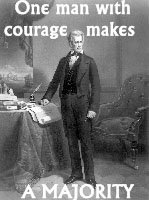
If the ideology of the Elite class is apparent because it is used as a tool to demean and belittle citizens at every turn so as to invest power in government, then the country class seeks to invert that so that civil discourse and coming to term with honest disagreements can lead to a better society that has little need of oversight or regulation from government at any level.  By keeping to the Framing and Founding documents of the Nation, and their outlooks that are invested in them, the country class feels little need to justify their concepts of a 'leave me alone' attitude towards government as it is a tried and true way to win a good life by one's hard work.  Even such as 'reformers' of government become distrusted as they attempt to add more apparatus into government to 'correct' its problems, but those only serve to increase the size, power and scope of government at each and every turn.  There is no 'good' that can be done by government, save their being less of it.  It is hard to get a spokesman for these beliefs, and yet a few (very few) have cropped up in our history after the Founding.  For this I need not travel back far, at all, in my own postings to come up with this document and these words from a past President of the United States:

It is to be regretted that the rich and powerful too often bend the acts of government to their selfish purposes. Distinctions in society will always exist under every just government. Equality of talents, of education, or of wealth can not be produced by human institutions. In the full enjoyment of the gifts of Heaven and the fruits of superior industry, economy, and virtue, every man is equally entitled to protection by law; but when the laws undertake to add to these natural and just advantages artificial distinctions, to grant titles, gratuities, and exclusive privileges, to make the rich richer and the potent more powerful, the humble members of society-the farmers, mechanics, and laborers-who have neither the time nor the means of securing like favors to themselves, have a right to complain of the injustice of their Government. There are no necessary evils in government. Its evils exist only in its abuses. If it would confine itself to equal protection, and, as Heaven does its rains, shower its favors alike on the high and the low, the rich and the poor, it would be an unqualified blessing. In the act before me there seems to be a wide and unnecessary departure from these just principles.

Nor is our Government to be maintained or our Union preserved by invasions of the rights and powers of the several States. In thus attempting to make our General Government strong we make it weak. Its true strength consists in leaving individuals and States as much as possible to themselves-in making itself felt, not in its power, but in its beneficence; not in its control, but in its protection; not in binding the States more closely to the center, but leaving each to move unobstructed in its proper orbit.

Experience should teach us wisdom. Most of the difficulties our Government now encounters and most of the dangers which impend over our Union have sprung from an abandonment of the legitimate objects of Government by our national legislation, and the adoption of such principles as are embodied in this act. Many of our rich men have not been content with equal protection and equal benefits, but have besought us to make them richer by act of Congress. By attempting to gratify their desires we have in the results of our legislation arrayed section against section, interest against interest, and man against man, in a fearful commotion which threatens to shake the foundations of our Union. It is time to pause in our career to review our principles, and if possible revive that devoted patriotism and spirit of compromise which distinguished the sages of the Revolution and the fathers of our Union. If we can not at once, in justice to interests vested under improvident legislation, make our Government what it ought to be, we can at least take a stand against all new grants of monopolies and exclusive privileges, against any prostitution of our Government to the advancement of the few at the expense of the many, and in favor of compromise and gradual reform in our code of laws and system of political economy.

This is a succinct enunciation of the outlook of Mr. Codevilla's country class and that President is condemned by the Elite class for the outcomes of actions he started but succinctly said he did not wish to start in the first place and warned of the consequences of not using reason and accommodation to work out mutual problems.  That is President Andrew Jackson and the quoted section, above, comes from his Bank Veto message of 1832 which was the last time a massive part of the federal government's work to 'guide' the economy was rejected and dismantled.  That lasted for 80 years until President Wilson signed the Federal Reserve into being.  As for the Elitist imputation that Andrew Jackson was a genocidal racist, they cannot square his actions of adopting a native child as his son nor his words and deeds to ensure that we had good relations with Indian tribes that did work with us and went so far as to castigate Congress for letting those accounts fall into disrepair.  Racial genocide cannot be squared with those words, deeds and the meanings behind them, and yet to divide the people from those outlooks and actions (good and bad) they misrepresent the bad, hype it up to a high degree and then seek to say that is the sum total of the man.  If that were the case he would not have taken the actions he did, give the warnings he did, attempt to avert the problems as best he could and then, only in failure, still try to find a good end to what was a very bad situation in which lives were being lost.

No matter how vilified the man is, his outlooks, rooted in the basics of human individualism as the source of strength for society and prosperity, continue to this day.  Mr. Codevilla is not the first to highlight these people, and another writer took up that task nearly a decade ago:

The new Jacksonianism is no longer rural and exclusively nativist. Frontier Jacksonianism may have taken the homesteading farmer and the log cabin as its emblems, but today’s Crabgrass Jacksonianism sees the homeowner on his modest suburban lawn as the hero of the American story. The Crabgrass Jacksonian may wear green on St. Patrick’s Day; he or she might go to a Catholic Church and never listen to country music (though, increasingly, he or she probably does); but the Crabgrass Jacksonian doesn’t just believe, she knows that she is as good an American as anybody else, that she is entitled to her rights from Church and State, that she pulls her own weight and expects others to do the same. That homeowner will be heard from: Ronald Reagan owed much of his popularity and success to his ability to connect with Jacksonian values. Ross Perot and Pat Buchanan in different ways have managed to tap into the power of the populist energy that Old Hickory rode into the White House. In both domestic and foreign policy, the twenty-first century will be profoundly influenced by the values and concerns of Jacksonian America.

[..]

Jacksonian America’s love affair with weapons is, of course, the despair of the rest of the country. Jacksonian culture values firearms, and the freedom to own and use them. The right to bear arms is a mark of civic and social equality, and knowing how to care for firearms is an important part of life. Jacksonians are armed for defense: of the home and person against robbers; against usurpations of the federal government; and of the United States against its enemies. In one war after another, Jacksonians have flocked to the colors. Independent and difficult to discipline, they have nevertheless demonstrated magnificent fighting qualities in every corner of the world. Jacksonian America views military service as a sacred duty. When Hamiltonians, Wilsonians and Jeffersonians dodged the draft in Vietnam or purchased exemptions and substitutes in earlier wars, Jacksonians soldiered on, if sometimes bitterly and resentfully. An honorable person is ready to kill or to die for family and flag.

[..]

The underlying cultural unity between African Americans and Anglo-Jacksonian America shaped the course and ensured the success of the modern civil rights movement. Martin Luther King and his followers exhibited exemplary personal courage, their rhetoric was deeply rooted in Protestant Christianity, and the rights they asked for were precisely those that Jacksonian America values most for itself. Further, they scrupulously avoided the violent tactics that would have triggered an unstoppable Jacksonian response.

Although cultures change slowly and many individuals lag behind, the bulk of American Jacksonian opinion has increasingly moved to recognize the right of code-honoring members of minority groups to receive the rights and protections due to members of the folk community. This new and, one hopes, growing feeling of respect and tolerance emphatically does not extend to those, minorities or not, who are not seen as code-honoring Americans. Those who violate or reject the code—criminals, irresponsible parents, drug addicts—have not benefited from the softening of the Jacksonian color line.

[..]

Jacksonians are instinctively democratic and populist. Hamiltonians mistrust democracy; Wilsonians don’t approve of the political rough and tumble. And while Jeffersonians support democracy in principle, they remain concerned that tyrannical majorities can overrule minority rights. Jacksonians believe that the political and moral instincts of the American people are sound and can be trusted, and that the simpler and more direct the process of government is, the better will be the results. In general, while the other schools welcome the representative character of our democracy, Jacksonians tend to see representative rather than direct institutions as necessary evils, and to believe that governments breed corruption and inefficiency the way picnics breed ants. Every administration will be corrupt; every Congress and legislature will be, to some extent, the plaything of lobbyists. Career politicians are inherently untrustworthy; if it spends its life buzzing around the outhouse, it’s probably a fly. Jacksonians see corruption as human nature and, within certain ill-defined boundaries of reason and moderation, an inevitable by-product of government.

From Walter Russell Mead's The Jacksonian Tradition, put out in the fall 1999/2000 issue of the National Interest (archived here by Steven Den Beste).

From Mr. Codevilla's outlook of 'what if the country class took power in Congress and most Statehouses?' he clearly puts forward that the top-down methodology of the current ruling Elite class cannot serve as it is inherently Statist, not individual oriented:

Achieving the country class's inherently revolutionary objectives in a manner consistent with the Constitution and with its own diversity would require the Country Party to use legislation primarily as a tool to remove obstacles, to instruct, to reintroduce into American life ways and habits that had been cast aside. Passing national legislation is easier than getting people to take up the responsibilities of citizens, fathers, and entrepreneurs.

Reducing the taxes that most Americans resent requires eliminating the network of subsidies to millions of other Americans that these taxes finance, and eliminating the jobs of government employees who administer them. Eliminating that network is practical, if at all, if done simultaneously, both because subsidies are morally wrong and economically counterproductive, and because the country cannot afford the practice in general. The electorate is likely to cut off millions of government clients, high and low, only if its choice is between no economic privilege for anyone and ratifying government's role as the arbiter of all our fortunes. The same goes for government grants to and contracts with so-called nonprofit institutions or non-governmental organizations. The case against all arrangements by which the government favors some groups of citizens is easier to make than that against any such arrangement. Without too much fuss, a few obviously burdensome bureaucracies, like the Department of Education, can be eliminated, while money can be cut off to partisan enterprises such as the National Endowments and public broadcasting. That sort of thing is as necessary to the American body politic as a weight reduction program is essential to restoring the health of any human body degraded by obesity and lack of exercise. Yet shedding fat is the easy part. Restoring atrophied muscles is harder. Reenabling the body to do elementary tasks takes yet more concentration.

The grandparents of today's Americans (132 million in 1940) had opportunities to serve on 117,000 school boards. To exercise responsibilities comparable to their grandparents', today's 310 million Americans would have radically to decentralize the mere 15,000 districts into which public school children are now concentrated. They would have to take responsibility for curriculum and administration away from credentialed experts, and they would have to explain why they know better. This would involve a level of political articulation of the body politic far beyond voting in elections every two years.

If self-governance means anything, it means that those who exercise government power must depend on elections. The shorter the electoral leash, the likelier an official to have his chain yanked by voters, the more truly republican the government is. Yet to subject the modern administrative state's agencies to electoral control would require ordinary citizens to take an interest in any number of technical matters. Law can require environmental regulators or insurance commissioners, or judges or auditors to be elected. But only citizens' discernment and vigilance could make these officials good. Only citizens' understanding of and commitment to law can possibly reverse the patent disregard for the Constitution and statutes that has permeated American life. Unfortunately, it is easier for anyone who dislikes a court's or an official's unlawful act to counter it with another unlawful one than to draw all parties back to the foundation of truth.

The cutting of the size of government can be done either piecemeal, as Mr. Codevilla suggests, or via the concept of a 'Grand Bargain' like much of what the Progressives propose again and again.  A reduction in government 'Grand Bargain' attacks the root of the government's intervention in the lives of Americans and would address not just the wastrel spending at Education, Energy, Agriculture, the various 'arts', and so on, but would introduce the dismantling of the government welfare state in a way amenable to any American.

That can be done by, firstly, letting those know who currently draw on Social Security that they can continue to do so.  Second that those who paid into the system can then utilize their 'invested' funds to cut their own taxes.  Third FICA goes away as SSA becomes a direct funding for those left in it, and no new individuals will be let into it.  Fourth Medicare/Medicaid are added up, divided by two, apportioned to the States by population and phased out over 5 years.  SSA, Medicare and Medicaid now eat up all income of the federal government and all else, including interest on the National Debt is paid off in loans.  To working Americans this offers a double tax-cut that will last for some years as withholding from earnings plummets by 15-20%, which puts more money into the pockets of ordinary Americans, and by using SSA funds 'paid into' the system many people can live essentially tax free for some years.

That requires a 'cut to the bone' government which has already, at that point, agreed to remove the bulk of HHS and all of many Departments and Agencies.

The final piece, and really should be done, is to remove the 1911 Public Law setting the size of the House at 435 seats.  That is anti-representative in the extreme and needs to end.  For Americans to be represented in our diversity we need deep and diverse representation.  A Maximum House of 10,000 or may be unachievable (though very Constitutional) and the concept is that the problem of corruption is not the amount of money seeking to corrupt, but too few and easily corruptible.  If the Representative position is turned into a job with no real forward motion from it to higher office, then turn-over will be often for those seats as even minor demographic change impacts representation between each census.  That can be done by a majority in both Houses and either a Presidential signature or a veto over-ride.

The 'Grand Bargain' is that Americans, in a time of economic trouble, look to each other and to get the government out of doing ill to all of us, first, and then reducing the size, scope, power and cost of inefficient and incompetent government and making sure that each American is on a level playing field unfettered by heinous taxation.  The concept of being on a road to fiscal rectitude by paying down our debt with a goal of paying it off rang true after the Revolution as President Jackson made sure that he was the first President of a debt-free Nation.  That didn't last past his administration.  Now with the de-bunking of Keynesian economics and the bad examples set in Europe, the US can see its National budget like its household one and know that being in debt and facing bankruptcy is not at all good.  That can be made to stick as it is compelling and offers a ready exemplar of how you manage your own fiscal house.

It starts with pulling out the underpinnings for the massive federal government and its intervention into our economy (via the Federal Reserve, Fannie, Freddie, Ginnie and Sallie) plus ending the insane proposition of the ponzi scheme of SSA and the demographic black hole of federally subsidized health care.  It ends with increased representation, smaller government and much, much lower taxation aimed at setting us free of debt.

That cannot be done in one session of Congress.

Yet it must be done to retain liberty and freedom for all Americans rich and poor alike.

25 June 2010

Commentary, commentary yet more commentary

Commentary given at a Hot Air Green Room posting by Doctor Zero on Night of the yeoman.

In arguing that the yeoman reappear in the Republican party, there is a point missed about America and Americans.

My original text has had a spelling error or two changed, but all else remains the same for the amusement of the populace.

===

There are also Americans that understand the following, but those that are attached to the corrupt system cannot fathom:

But this act does not permit competition in the purchase of this monopoly. It seems to be predicated on the erroneous idea that the present stockholders have a prescriptive right not only to the favor but to the bounty of Government. It appears that more than a fourth part of the stock is held by foreigners and the residue is held by a few hundred of our own citizens, chiefly of the richest class. For their benefit does this act exclude the whole American people from competition in the purchase of this monopoly and dispose of it for many millions less than it is worth. This seems the less excusable because some of our citizens not now stockholders petitioned that the door of competition might be opened, and offered to take a charter on terms much more favorable to the Government and country.

But this proposition, although made by men whose aggregate wealth is believed to be equal to all the private stock in the existing bank, has been set aside, and the bounty of our Government is proposed to be again bestowed on the few who have been fortunate enough to secure the stock and at this moment wield the power of the existing institution. I can not perceive the justice or policy of this course. If our Government must sell monopolies, it would seem to be its duty to take nothing less than their full value, and if gratuities must be made once in fifteen or twenty years let them not be bestowed on the subjects of a foreign government nor upon a designated and favored class of men in our own country. It is but justice and good policy, as far as the nature of the case will admit, to confine our favors to our own fellow-citizens, and let each in his turn enjoy an opportunity to profit by our bounty. In the bearings of the act before me upon these points I find ample reasons why it should not become a law.

Back in the days when the legislative branch understood that the gifts bestowed by them in the name of the people must come up for review, the licensing of companies put into a secured government position must come up for a re-vote. Thus corruption is countered by having the very question of 'if' such a body should be held by the government is addressed often so as to review the corruption of such institutions helped in the name of the people. What has happened is a class of federal bodies has been formed with the largesse of the people, with a permanent grant into our treasury, that have NO re-vote ever cast upon them. They become havens for corruption and then feed that corruption back into the system with those who formed them and supporting them getting kickbacks from those organizations. Thus federal money is put in support of politicians, not the government, and the depth of corruption becomes commonplace and those wanting to stop it are then decried as 'neophytes' or 'dreamers' and the system is supported as 'good' or 'helpful' while they, in fact, drain the accounts of the people unaccountably. When laws are drafted to help some over others, to support federal corporations against their private counter-parts, and when the power of government is granted unaccountably, you do not get sweetness, light and the wisest governing. You get rulers and a ruling class. In that era it was a bank, a far reaching, federally authorized bank that did things that were not allowed by the Constitution and secured money for the rich and powerful, and put the common man at a disadvantage. Yet the cries of that age echo again:
The principle here affirmed is that the "degree of its necessity," involving all the details of a banking institution, is a question exclusively for legislative consideration. A bank is constitutional, but it is the province of the Legislature to determine whether this or that particular power, privilege, or exemption is "necessary and proper" to enable the bank to discharge its duties to the Government, and from their decision there is no appeal to the courts of justice. Under the decision of the Supreme Court, therefore, it is the exclusive province of Congress and the President to decide whether the particular features of this act are necessary and proper in order to enable the bank to perform conveniently and efficiently the public duties assigned to it as a fiscal agent, and therefore constitutional, or unnecessary and improper, and therefore unconstitutional.
We hear the cry, today, of 'too big to fail' and taking corporations over as a 'necessity'. That those federally granted corporations now taking over the majority of home loans, thus having a stake in them, is 'good' no matter how much red ink they bleed of our expense. This is a shirking of responsibility of the first order and against the fundamental system of review by our representatives, who we grant the power to use in our name in a limited way. It is not that such corporations are 'convenient' or 'necessary', it is that they are unaccountable:
On two subjects only does the Constitution recognize in Congress the power to grant exclusive privileges or monopolies. It declares that "Congress shall have power to promote the progress of science and useful arts by securing for limited times to authors and inventors the exclusive right to their respective writings and discoveries." Out of this express delegation of power have grown our laws of patents and copyrights. As the Constitution expressly delegates to Congress the power to grant exclusive privileges in these cases as the means of executing the substantive power " to promote the progress of science and useful arts," it is consistent with the fair rules of construction to conclude that such a power was not intended to be granted as a means of accomplishing any other end. On every other subject which comes within the scope of Congressional power there is an ever-living discretion in the use of proper means, which can not be restricted or abolished without an amendment of the Constitution. Every act of Congress, therefore, which attempts by grants of monopolies or sale of exclusive privileges for a limited time, or a time without limit, to restrict or extinguish its own discretion in the choice of means to execute its delegated powers is equivalent to a legislative amendment of the Constitution, and palpably unconstitutional.
A limit of time is necessary so that institutions and their venues do not trump the public will as it is the public will that is the holder of all authority. To insure that such institutions follow our will, they must be renewed on a regular basis... and yet you cannot get that for the Federal Reserve, SEC, Fannie, Freddie, Ginnie, Sallie, and now GM and Chrysler, along with some banks. When the government determines in its biased way who is or is not 'too big to fail' then we become beholden to government, not government to the people. The lax approach of 'so what, I get mine' and 'its all for the good' mask the horrific deed of our government seeking to own our goods, our companies, our land and our liberty in the seizure of same via these unaccountable agencies:
The Government of the United States have no constitutional power to purchase lands within the States except "for the erection of forts, magazines, arsenals, dockyards, and other needful buildings," and even for these objects only "by the consent of the legislature of the State in which the same shall be." By making themselves stockholders in the bank and granting to the corporation the power to purchase lands for other purposes they assume a power not granted in the Constitution and grant to others what they do not themselves possess. It is not necessary to the receiving, safe-keeping, or transmission of the funds of the Government that the bank should possess this power, and it is not proper that Congress should thus enlarge the powers delegated to them in the Constitution.
If the power is not granted to the federal government to do these things, then they can be neither necessary or proper, no matter how 'convenient' those actions are. The concept of rule of law is that the law knows no favorites and prefers to use the sword of justice to chop off the thumb on the scale rather than allow it. If these powers were seen as not necessary and proper, then it behooves the American public to take those agencies and corporations to court to ask where the federal government gets the power to seize lands and property without due process of law and without consultation of the States in plural. The federal government can no more 'invest' in these property bearing entities than it can in your home, save via grant from each State for each piece of land. Not accumulated and aggregated, but piecemeal as that is a necessary protection of you from your government. From all this and more, much more, the summation of why such things should not be continued, should not be upheld and should be countered rings as true today as it did when first given:

It is to be regretted that the rich and powerful too often bend the acts of government to their selfish purposes. Distinctions in society will always exist under every just government. Equality of talents, of education, or of wealth can not be produced by human institutions. In the full enjoyment of the gifts of Heaven and the fruits of superior industry, economy, and virtue, every man is equally entitled to protection by law; but when the laws undertake to add to these natural and just advantages artificial distinctions, to grant titles, gratuities, and exclusive privileges, to make the rich richer and the potent more powerful, the humble members of society-the farmers, mechanics, and laborers-who have neither the time nor the means of securing like favors to themselves, have a right to complain of the injustice of their Government. There are no necessary evils in government. Its evils exist only in its abuses. If it would confine itself to equal protection, and, as Heaven does its rains, shower its favors alike on the high and the low, the rich and the poor, it would be an unqualified blessing. In the act before me there seems to be a wide and unnecessary departure from these just principles.

Nor is our Government to be maintained or our Union preserved by invasions of the rights and powers of the several States. In thus attempting to make our General Government strong we make it weak. Its true strength consists in leaving individuals and States as much as possible to themselves-in making itself felt, not in its power, but in its beneficence; not in its control, but in its protection; not in binding the States more closely to the center, but leaving each to move unobstructed in its proper orbit.

Experience should teach us wisdom. Most of the difficulties our Government now encounters and most of the dangers which impend over our Union have sprung from an abandonment of the legitimate objects of Government by our national legislation, and the adoption of such principles as are embodied in this act. Many of our rich men have not been content with equal protection and equal benefits, but have besought us to make them richer by act of Congress. By attempting to gratify their desires we have in the results of our legislation arrayed section against section, interest against interest, and man against man, in a fearful commotion which threatens to shake the foundations of our Union. It is time to pause in our career to review our principles, and if possible revive that devoted patriotism and spirit of compromise which distinguished the sages of the Revolution and the fathers of our Union. If we can not at once, in justice to interests vested under improvident legislation, make our Government what it ought to be, we can at least take a stand against all new grants of monopolies and exclusive privileges, against any prostitution of our Government to the advancement of the few at the expense of the many, and in favor of compromise and gradual reform in our code of laws and system of political economy.

Never forget that what we have today is not the only way and that if we grow used to the festering sore we shall be consumed by it.

16 June 2010

The DLS of energy and engineering

Watching the speech given by President Obama (transcript) and the reaction by Gov. Palin seen on Bill O'Reilly's show...

... I was struck first and most seriously by the problems that the President has in understanding just what sort of problem the oil well blowout is and how to deal with it.  So lets start with a bit from that from President Obama:

On April 20th, an explosion ripped through BP Deepwater Horizon drilling rig, about 40 miles off the coast of Louisiana.  Eleven workers lost their lives.  Seventeen others were injured.  And soon, nearly a mile beneath the surface of the ocean, oil began spewing into the water.

Because there has never been a leak this size at this depth, stopping it has tested the limits of human technology.  That’s why just after the rig sank, I assembled a team of our nation’s best scientists and engineers to tackle this challenge -- a team led by Dr. Steven Chu, a Nobel Prize-winning physicist and our nation’s Secretary of Energy.  Scientists at our national labs and experts from academia and other oil companies have also provided ideas and advice.

Deep water drilling is a result of policy set by Congress on restricting shallow water drilling on the continental shelf.  It is far riskier and has more unknowns in it than shallow water drilling due to the depth, pressures and what lies beneath the sea floor is harder to understand due to depth.  By policy set up by multiple administrations and Congresses over the past 30 years, we no longer go after the 'easy' to get at oil on land or near shore waters, even when there are demonstrated safer means to do so (safer meaning that they have fewer unknown risks and means to deal with known risks).  Getting energy from any source is a risk-cost-benefit analysis that requires the full understanding of what the risks and costs are for getting the benefit.  Solar cells need rare earth metals that need to be mined and they tend to be in places where they aren't easy to get at, and yield a low percentage yield of sunlight to electricity.  Algae stations on power plants or industrial facilities are re-capture systems for carbon and heat, and so cannot get more energy from the system than the waste materials allow.  Wind power is limited to a very few areas with relatively constant winds, and require infrastructure outlay and maintenance and result in a larger number of bird kills due to the blades of the devices than in the natural setting.

Each of these have a cost to them, a risk to them, a benefit to them, and an energy conversion or re-capture rate to them.  That is, at best, high school physics at work: the necessary equations of energy output, energy conversion and capture can be done with a decent high school science background that includes electricity, biology, and chemistry.  To make these systems work requires this other field the President lightly touches upon.

Engineering.

Engineering is the Dirty Little Secret of getting energy.

Only at the very far edges of energy production (say magnetically confined fusion or laser fusion) do you get to some advanced physics, and making those systems into something that is feasible to create on a mass scale requires good engineering.  Electrostatic contained fusion holds much and extreme promise, if it can prove itself out as the components are readily available for it.  Scaling it via engineering (up to larger facilities and finding the absolute minimum smallest useful system) requires little to know actual new physics or chemistry, but metallurgy and energy systems engineering.  When you are going through nearly a mile of ocean to dig a well on the bottom of the ocean, you have an engineering problem as the physics is pretty staid and well known.  Once you start drilling you have a geophysical and seismic prospecting venue to add in, but engineering gets you there.

So when you are forming up a 'team of experts' what is the role of a Nobel Winning Physicist?  He may be a great physicist, but what sort of a hands-on engineer is he?  Ken Salazar wrote a report on deep water drilling claiming that a panel of experts backed the report when, in actual fact, they did no such thing (Source: The Times-Picayune, 09 JUN 2010, by David Hammer).  Thus we do not have an expert engineer leading the project and the co-leader is a man who misrepresents deep water drilling experts when writing reports about the subject.

If Ken Salazar can't be bothered to write up the truth about his report on this subject prior to this panel, then what is the chance he will actually do so when heading up the panel?  And even an applied physicist is not the best of all possible individuals for heading up this team, while an oceanographer, geologist, or actual deep water engineer would be.  A Nobel Prize does not bestow deific wisdom outside of your tiny specialty, and for a panel meant to do something it requires experience, not prestige to actually address the problem.

Reading the above, knowing that there are dry land sources to be drilled (North Slope of Alaska, oil fields in the Dakotas, oil shale in Colorado, near shore drilling for California which has oil naturally seeping out from the ocean floor, and near shore areas around the Gulf and Eastern Seaboard),  what comes next I can only classify, at best, as misstatement and, at worse, an outright lie:

For decades, we have known the days of cheap and easily accessible oil were numbered.  For decades, we’ve talked and talked about the need to end America’s century-long addiction to fossil fuels.  And for decades, we have failed to act with the sense of urgency that this challenge requires.  Time and again, the path forward has been blocked -- not only by oil industry lobbyists, but also by a lack of political courage and candor. 

For decades we have heard the incantation of 'you can't drill there!' by environmentalists and NIMBYists that have restricted getting to the 'cheap and easily accessible oil'.  Now, when we need those 'cheap and easy' oil fields we are told that you can't drill in them... even with this disaster we have ongoing.  We also have another problem in that we haven't built a new refinery in this country since 1976, so we must pay extra for other Nations to refine our petroleum products for us.  That, too, has been done by politicians citing environmentalists and NIMBYists and appeasing them.  And by now blocking deep water drilling the President is seeking to escalate a crisis based on a false premise.  The risks and mitigation procedures get easier the closer you get to shore and damned easy once you have solid ground under you.  Yet that path has been blocked for decades, not by oil industry lobbyists of which BP has contributed a lot to Obama's past campaigns, but the lack of courage and candor by politicians willing to say that the risk for on-land and shallow water drilling are outweighed by the benefits to the Nation.

Now here I am going to take a swipe at Gov. Palin for mis-stating the triad of energy.  She puts for the triad of energy in America as:

1) Conventional fuels  (oil, natural gas, coal, nuclear)

2) Alternative fuels (wind, solar, biomass)

3) Conservation of energy

The actual triad that keeps the US powered?

1) Petroleum, including natural gas and derivatives

2) Coal

3) Nuclear

While conservation has made us more efficient, it does not contribute one single direct erg of energy to the grid, to your gas tank or to our energy reserves.  It reduces use, it does not increase supply.

Alternative fuels, combined, are in the neighborhood of 5-10% of our energy generation.  That is not a player in the energy game, save as a 'feel good' source to claim you are 'helping the environment'.  Well, good!  And the facilities that made all the solar cells, smelted the ore for the hardware, and transported all those lovely alternative fuel options around?  The actual Triad of energy.  This is a DLS of alternative energy: it isn't cost effective because if it were it would be beating out someone in the Triad.  When alternative fuels or energy sources can actually get into the 20% range of energy production, then it can look to beat out nuclear... although we are, finally, starting to build new nuclear plants of modern design that are far safer than the old style generation 1 and 2 plants.  If we could get some of the regulations out of the way designed for the old style plants, that is.

If you want to be generous you can lump coal in with petroleum, move nuclear up to #2 and put Conservation in the #3 spot... but there is a difference between drilling for oil and mining for coal.  And mining for uranium ore.

To let you know how bad this pipe dream of alternative energy is, you can go to this paragraph by the President:

This is not some distant vision for America.  The transition away from fossil fuels is going to take some time, but over the last year and a half, we’ve already taken unprecedented action to jumpstart the clean energy industry.  As we speak, old factories are reopening to produce wind turbines, people are going back to work installing energy-efficient windows, and small businesses are making solar panels.  Consumers are buying more efficient cars and trucks, and families are making their homes more energy-efficient.  Scientists and researchers are discovering clean energy technologies that someday will lead to entire new industries.

Well GE announced a new wind turbine factory!  And it will create 1,900 jobs!  In the UK (Source: Business Green, 25 MAR 2010, James Murray):

The UK's position as one of the world's leading offshore wind energy markets was forcefully underlined today when General Electric (GE) announced plans to invest €110m to build its first British wind turbine manufacturing plant.

After months of speculation that it was considering locating a manufacturing facility in the UK, the US engineering giant said that it plans to create up to 1,900 new clean energy jobs across both GE and the new factory's related supply chain with the development of a new site on the UK mainland.

Ok not so good, but Ingeteam is opening one in the US along with a solar plant (Source: Renewable Energy World, 26 MAY 2010):

At the Windpower 2010 Conference, Ingeteam, a Spanish renewable energy manufacturing company, unveiled plans for its new US $15 million wind manufacturing facility in Wisconsin. At full capacity, the Milwaukee plant will employee 275 people and supply equipment capable of producing 7,500 megawatts (MW) of wind turbines each year for the U. S. renewable energy market.

And why are they building a power facility in the US?  I mean isn't Spain supposed to be the be-all, end-all of 'green' energy?  Well for that you can look at this from JSONLINE, Tom Daykin, 16 FEB 2010:

Also new: details on the public financing assistance for Ingeteam.

Governor Jim Doyle's office announced that the state is providing $4.5 million in tax credits, and a $500,000 Wisconsin Development Fund loan to Ingeteam. Usually, those loans are forgivable if a company meets job creation goals.

Ingeteam has also received $1.66 million in federal clean technology manufacturing tax credits, and will receive "further assistance" from the city, Doyle's office announced. I'll update that information at JSOnline.com as it becomes available.

Yes 'loans' that don't need to be repaid if they reach employment promises, tax credits which are a form of subsidies, and 'further assistance' from city government.  So for $2.1 million they need to create 275 jobs.  And then get subsidized via tax credits... this is economical how?

At American Thinker, Andrew Walden looks at the pirates of wind energy on 15 FEB 2010:

Some say that Ka Le is haunted -- and it is. But it's haunted not by Hawaii's legendary night marchers. The mysterious sounds are "Na leo o Kamaoa"-- the disembodied voices of 37 skeletal wind turbines abandoned to rust on the hundred-acre site of the former Kamaoa Wind Farm.

The voices of Kamaoa cry out their warning as a new batch of colonists, having looted the taxpayers of Spain, Portugal, and Greece, seeks to expand upon their multi-billion-dollar foothold half a world away on the shores of the distant Potomac River. European wind developers are fleeing the EU's expiring wind subsidies, shuttering factories, laying off workers, and leaving billions of Euros of sovereign debt and a continent-wide financial crisis in their wake. But their game is not over. Already they are tapping a new vein of lucre from the taxpayers and ratepayers of the United States.

[..]

Built in 1985, at the end of the boom, Kamaoa soon suffered from lack of maintenance. In 1994, the site lease was purchased by Redwood City, CA-based Apollo Energy. 

Cannibalizing parts from the original 37 turbines, Apollo personnel kept the declining facility going with outdated equipment. But even in a place where wind-shaped trees grow sideways, maintenance issues were overwhelming.  By 2004 Kamaoa accounts began to show up on a Hawaii State Department of Finance list of unclaimed properties. In 2006, transmission was finally cut off by Hawaii Electric Company. 

California's wind farms -- then comprising about 80% of the world's wind generation capacity -- ceased to generate much more quickly than Kamaoa.  In the best wind spots on earth, over 14,000 turbines were simply abandoned.  Spinning, post-industrial junk which generates nothing but bird kills.

The Spanish subsidized 'green' technology went bust when the subsidies disappeared and the investigation into the amount of fraud and corruption is still ongoing in Spain.  Even without that, the subsidies cost tax payers billions for a meager return and NO sustainable energy.  In engineering terms, the cost of building the infrastructure does not get payback fast enough to justify building it without subsidies and the ongoing maintenance costs then eat into revenue.  Plus the winds can be damned unpredictable.

Sustainable?  Really?

And as these manufacturers are already on the move from lack of subsidies, what makes anyone think that the US will do any better?  If you have been running down the US to be 'more like Europe' and Europe is moving away from 'alternative energy' due to it not paying anything back, then how can you support it here?  In fact as this is more engineering than science, and its not profitable, how can anyone justify subsidizing it, anywhere?

There are some places where 'alternative energy' is a great alternative as it is the ONLY alternative, or you can work out the cost/power generation/maintenance schedules to justify it.  That makes it a niche energy source, as the amount of energy to run a modern economy is phenomenal. 

If you want solar, it needs to be built in space where it is reliable, dependable, constant and only orbital mechanics put a facility in Earth's shadow for a few minutes every year.  Best place to get supplies is the low gravity well of the Moon and its resources, not Earth.  Want 'sustainable' energy?  Go to orbit where it is constantly sustained.

I notice that is not on anyone's agenda, but that is only because it is engineering, not rocket science any more.

But the worst part of this speech, and its hard to pick out just what is the worst but I'll give it a shot, is this paragraph where he comes in after wanting 'other approaches' on his road to a quixotic energy future that can't be economical:

All of these approaches have merit, and deserve a fair hearing in the months ahead.  But the one approach I will not accept is inaction.  The one answer I will not settle for is the idea that this challenge is somehow too big and too difficult to meet.  You know, the same thing was said about our ability to produce enough planes and tanks in World War II.  The same thing was said about our ability to harness the science and technology to land a man safely on the surface of the moon.  And yet, time and again, we have refused to settle for the paltry limits of conventional wisdom.  Instead, what has defined us as a nation since our founding is the capacity to shape our destiny -– our determination to fight for the America we want for our children.  Even if we’re unsure exactly what that looks like.  Even if we don’t yet know precisely how we’re going to get there.  We know we’ll get there.  

If he doesn't support inaction, then why didn't he do much of anything for 57 days except finger-point and cast blame around?  That is quintessentially inaction: not doing a damned thing to help the mess.

Then come the strawmen in the wind, that previous challenges to America were 'too difficult to meet'.  I'm afraid that when America had a good half of its industry idle due to the Great Depression it wasn't that we lacked 'industrial capacity' but that we had an insane financial system that was set up by the Federal Reserve and was then getting taxed to death which stalled out the recovery of 1937.  Japan worried that America would awaken from its political torpor and self-destructive finances put in by government.  They bet that we would let our politicians rule us... and that we would ask for an armistice or peace settlement.

As to going to the Moon: that was generally a feat of engineering and applied material sciences, along with the biosciences.  The basics of rocketry had been worked out by the 1930's and was in popular fiction, and then horrific fact with the V-2.  For the most part 'rocket science' was already known, it was just building the systems up around it to make it human friendly and survivable.  It wasn't 'if' it could be done, but 'how much cost and in how much time?'  What President Obama presents is a false representation of what those two achievements represented, and the atomic bomb can be included as it was the creation of nuclear physicists training themselves to become nuclear engineers, the first ever on the planet to successfully move from test reactors to nuclear devices.  The science was known, the engineering was new.

Each of those instances of engineering had a known end state: a goal that could be written down, defined, and have its parameters given.  That creates an engineering feat that can be done.  Goals for the number of aircraft to produce were met and then exceeded by increased worker efficiency as the aircraft were built and then a new set of engineers started designing new aircraft, from scratch, to meet design and threat envelopes, testing them and putting them into the air in weeks... something that would have taken years prior to the war.  And the moon landings were large scale system integration into how many pounds could be lifted from Earth to the Moon and returned, including a human crew.  The ratios were those of lift capacity, consumables, mass, endurance and trying to put in any leeway for contingencies as each ounce counted.  These are not things that can be done with 'alternative energy' as the economics of them are known on the engineering base and that base is slow to change as what is involved are easy to understand physics and chemistry.

This isn't 'conventional wisdom' but hard and fast engineering and known science.

One cannot toss billions of dollars at this and expect it to improve, because the advances necessary are not monetarily driven, but driven by testing and refinement of techniques that are known to get better productivity and marginal increases in energy generation capacity.  This is a huge disconnect between the political elites and their understanding of the actual, physical reality around them: they are so intelligent they aren't smart enough to figure out the basics of how it works.  I really am impressed by the strides made in such things as photovoltaic cell costs as our understanding of fabrication moves from clean-room fabrication plants to roll-to-roll printing on metal substrates.  Bioenergy recapture systems are a nice add-on to generate some fuel from waste heat and effluent, and should be investigated for larger potential.  Whole plant biomass conversion, particularly of pest plants and other non-productive plants, holds some promise at the fringes.  In a decade all of that might even break 5% of our energy needs... unfortunately our needs grow faster than marginal sources can provide.

Wholesale change of the type President Obama wants requires a fundamental restructuring and re-orientation of how we gather and use energy as a system.  Orbital solar power satellites are key to that due to cost efficiencies in orbit.  Electrostatic confinement fusion may play a huge role if it proves out, perhaps even a leading role.  Nuclear fission at generation 3 and 4 style plants will offer a long term shift for electricity production to augment e-stat fusion and sps systems.  If you want your car to be all electric, we need a brand new, from the ground up, electrical distribution system with storage capacity that is slowly coming together.  High density capacitors will play a role, as will superconductive materials as their physics and material properties are understood.  Liquid and solid high density energy sources will remain a staple for decades as we have a good system for gathering, transporting and utilizing them: fossil fuels aren't going away any time soon.

None of this can be subsidized if you want it to work right.  Incentivized, with prizes for given goals and achievements and then handing out production contracts?  Yes, that got us the modern aviation system back in the 1920's via postal contracts for air mail.  A prize scheme backed by actual contracts to do something is worthwhile as long as the prizes push the envelope and the contract work isn't critical... airmail wasn't critical, but helped build a critical part of the economy.  President Obama and the elite political class is unwilling to do that with 'alternative energy' not only because they can't figure it out, but even if they did it requires incremental achievements that lead to long lasting structural changes build by private industry in an economical fashion.  Subsidies don't do that, and can even retard achievement as you get paid off for what you have not what you can make that is better.  Challenging industry isn't bestowing it with gifts and subsidies, but putting down hard goals and prizes to be won... and 'first past the post' should be ditched for 'limited time achievement by anyone' sort of prizes so that multiple different ways of making things work gets rewarded.  Not all will be the best, but you don't know that up front.

Instead of an outward, future oriented programmatic view of energy needs, President Obama is sticking to known failed methods and procedures.

And he still isn't doing all that much to clean up the Gulf.

When our friends from the Netherlands and Norway, and other Nations, asked to help us on the clean up, we should have said YES and THANK YOU.  Instead they got NO and GO AWAY.

That is piss poor diplomacy.

It is worse management of a disaster.

And the job that has that in its purview rests on one person.

The lack of competence is stunning.

The lack of vision is lethal.